Grade 3 History & Geography
Study Bibles 26
Chapter 1: Rivers Bring Life to Farms and Cities
Why are crops grown close to the Nile and Yellow Rivers?
Keep this question in mind as you read. You’ll answer it at the end.Words to know
- river
- a body of moving or flowing water that follows a set pathCars drove across a bridge to get from one side of the river to the other side.
- riverbank
- the land at the edge of a riverMany trees and plants grew on the riverbank.
- source
- a supply where an item such as water can be obtainedThe river was the town’s only source of drinking water.
- irrigation
- watering of crops by moving water from a well, a river, or a lake, to a place where it does not rain enough to grow cropsThe farmer used irrigation to keep the corn plants in his field alive.
- silt
- tiny pieces of soil or earth carried by the water in a riverThe flood left behind a thick layer of silt on the ground.
- flow
- to move; water moves (or flows) downstream in a riverI like to listen to the sound of the river as it flows over the rocks.
Read: Chapter 1, “Rivers Bring Life to Farms and Cities”
Read it aloud together, or let your student read on their own. Pictures and maps are part of the lesson — talk about them too.
Text version (for read-aloud apps and screen readers)
Chapter 1
Rivers Bring Life to
Farms and Cities
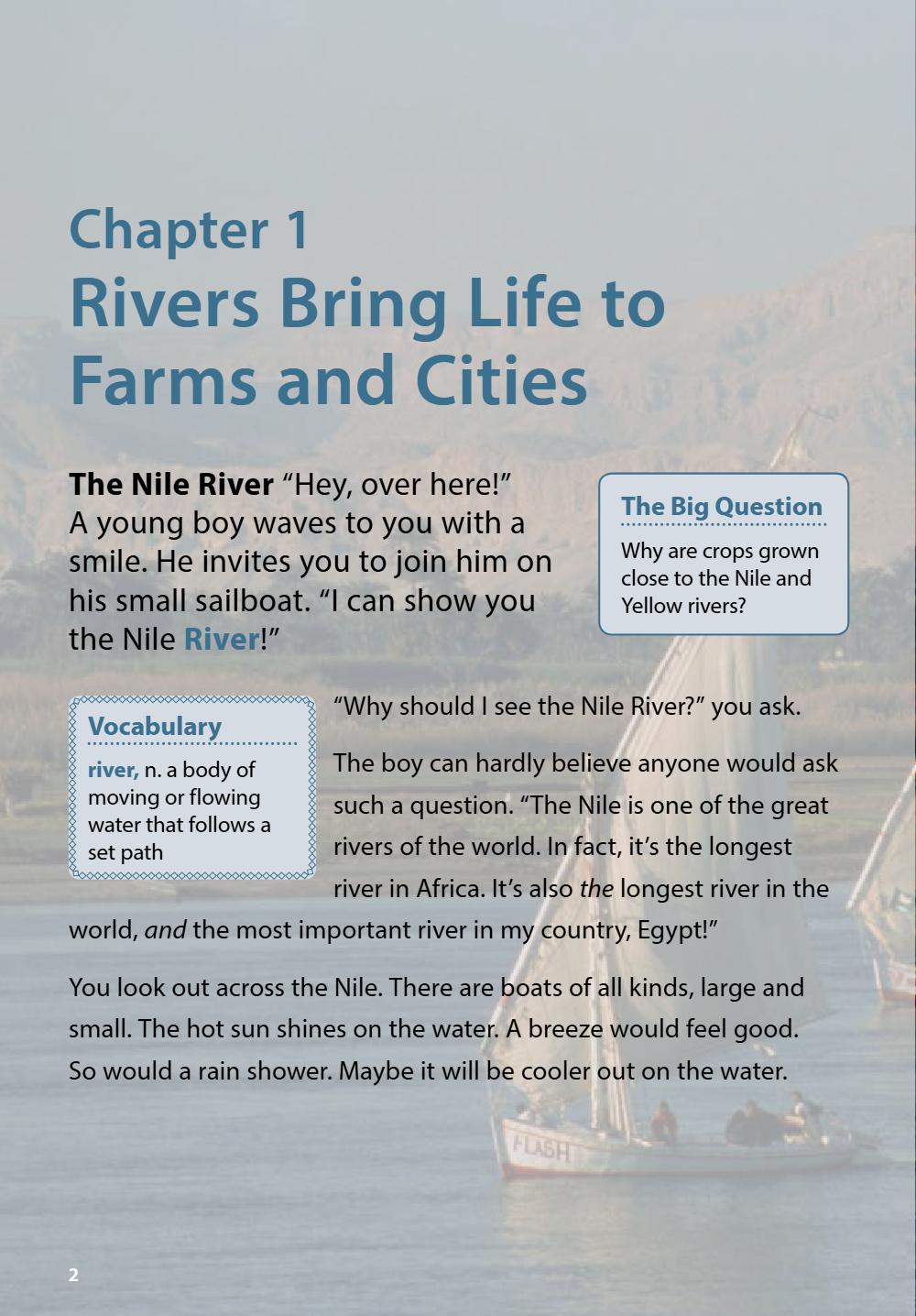
The Nile River “Hey, over here!”
A young boy waves to you with a
smile. He invites you to join him on
his small sailboat. “I can show you
the Nile River!”
Vocabulary
river, n. a body of
moving or flowing
water that follows a
set path
The Big Question
Why are crops grown
close to the Nile and
Yellow rivers?
“Why should I see the Nile River?” you ask.
The boy can hardly believe anyone would ask
such a question. “The Nile is one of the great
rivers of the world. In fact, it’s the longest
river in Africa. It’s also the longest river in the
world, and the most important river in my country, Egypt!”
You look out across the Nile. There are boats of all kinds, large and
small. The hot sun shines on the water. A breeze would feel good.
So would a rain shower. Maybe it will be cooler out on the water.
2
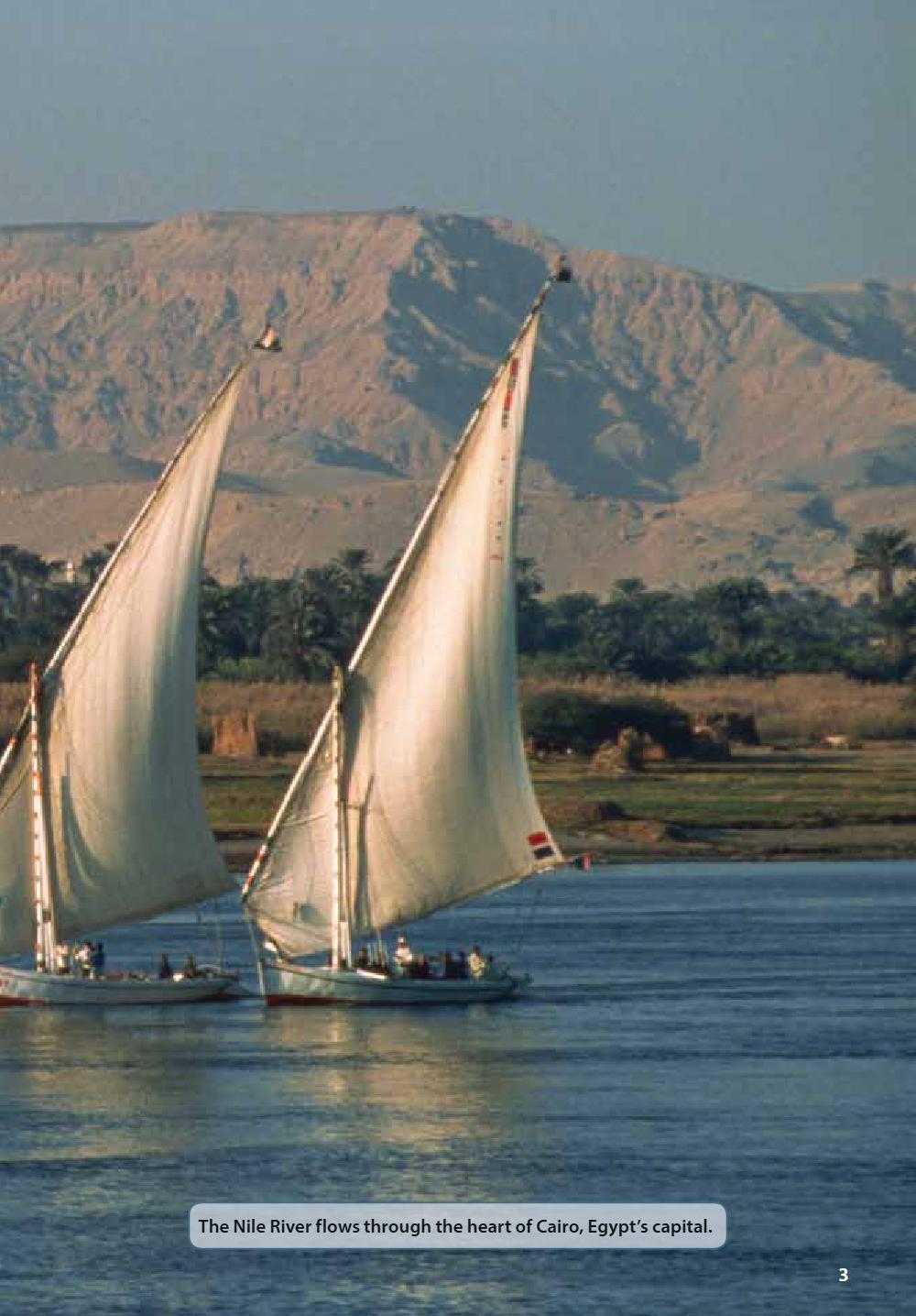
The Nile River flows through the heart of Cairo, Egypt’s capital.
3
Vocabulary
riverbank, n. the land
at the edge of a river
source, n. a supply
where an item such
as water can be
obtained
“OK, let’s go!” you say. Your new friend tells
you his name is Ahmed (/ah*med/). He is in
his early teens, and he earns money guiding
tourists on the Nile River. Together, the two
of you set off in Ahmed’s boat. After a few
minutes, you look back at the land. You see
trees lined up on the riverbank. Behind
the trees there is sand. It stretches as far as you can see into the
distance. The Nile River flows right through the Sahara, the largest
and one of the driest deserts in the world.
Cool Facts About the Nile River
• The Nile River looks black when it floods because of the color of the
sediment it carries.
• Ancient Egyptians called the river Ar or Aur, which means “black.”
“Nearly everyone in my country lives close to the Nile River,”
Ahmed says. “It’s our main source of drinking water. It also
provides the water that farmers use to grow food.”
The Nile River is a wide and powerful river. It carries Ahmed’s boat as if
it were a feather. Suddenly you see something familiar in the distance.
“Do you see the Great Pyramids (/pihr*uh*mihdz/)?” Ahmed says,
pointing to them proudly.
You remember learning about the pyramids in first grade. Now
you decide to show off what you learned.
“Thousands of people worked for many years to build those
pyramids,” you say. “They brought huge blocks of stone to build
them. They used boats on this river to carry the stone.”
4
Ahmed nods in agreement.
It’s hot, and you’re getting thirsty. You think about all those
workers sweating in the fierce sun to build the pyramids. “What
did workers eat and drink out here in the desert?” you ask Ahmed.
“I think they drank water from the Nile,”
Ahmed replied. “Even though most of my
country is desert, farmers have always grown
plenty of food,” he explains. “After all, they
had to feed thousands of people living in
cities. But the only way they could do it in
this dry place was to use water from the Nile
Vocabulary
irrigation, n.
watering of crops by
moving water from a
well, a river, or a lake,
to a place where it
does not rain enough
to grow crops
River for irrigation (/ihr*uh*gae*shun/).
“For thousands of years, we have depended on the river for
irrigation of the farmers’ crops. We say the river’s water gives life
to the farmers’ thirsty crops.”
The sun is setting in a golden sky. You and Ahmed make plans to
visit the pyramids on another day.
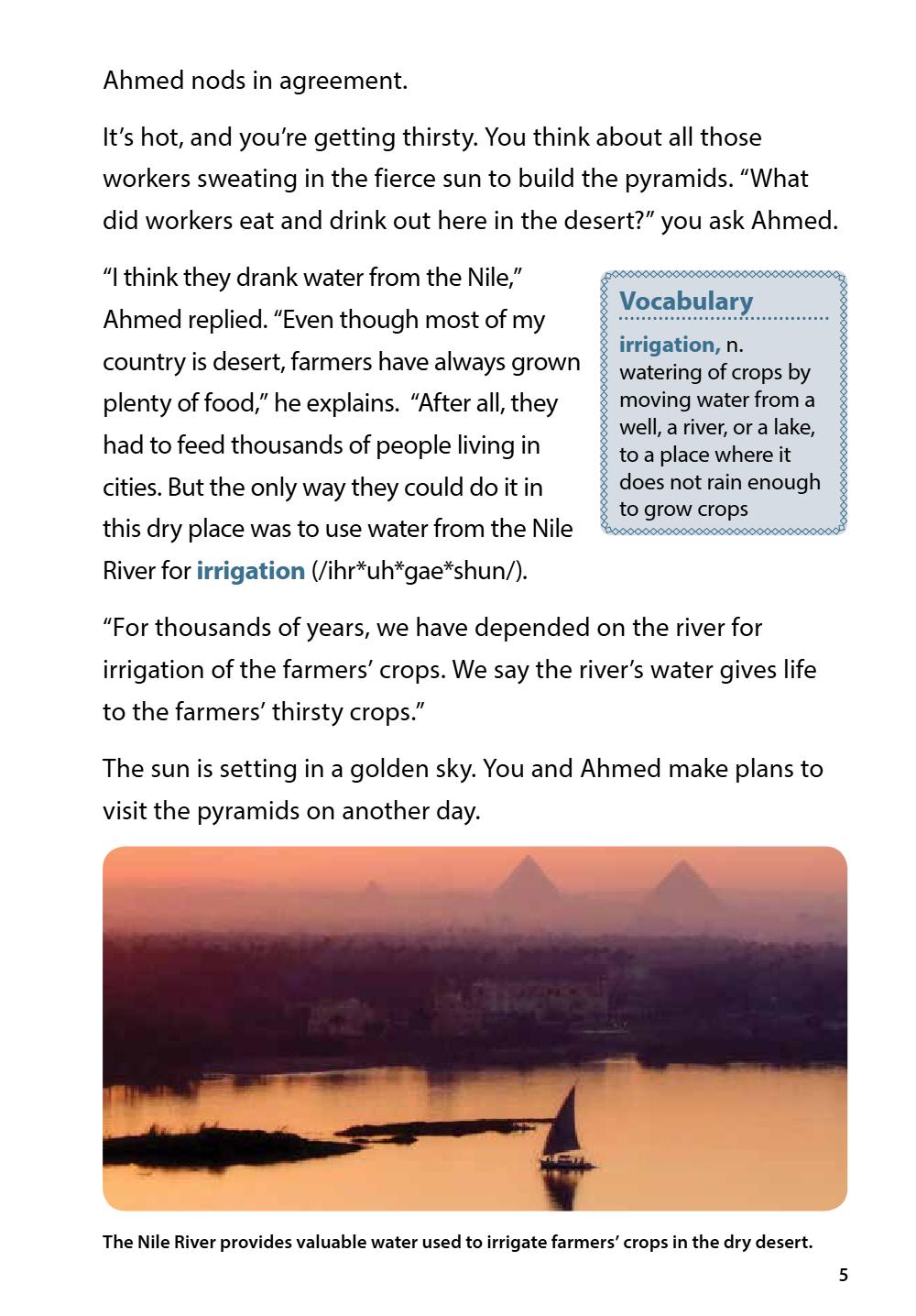
The Nile River provides valuable water used to irrigate farmers’ crops in the dry desert.
5
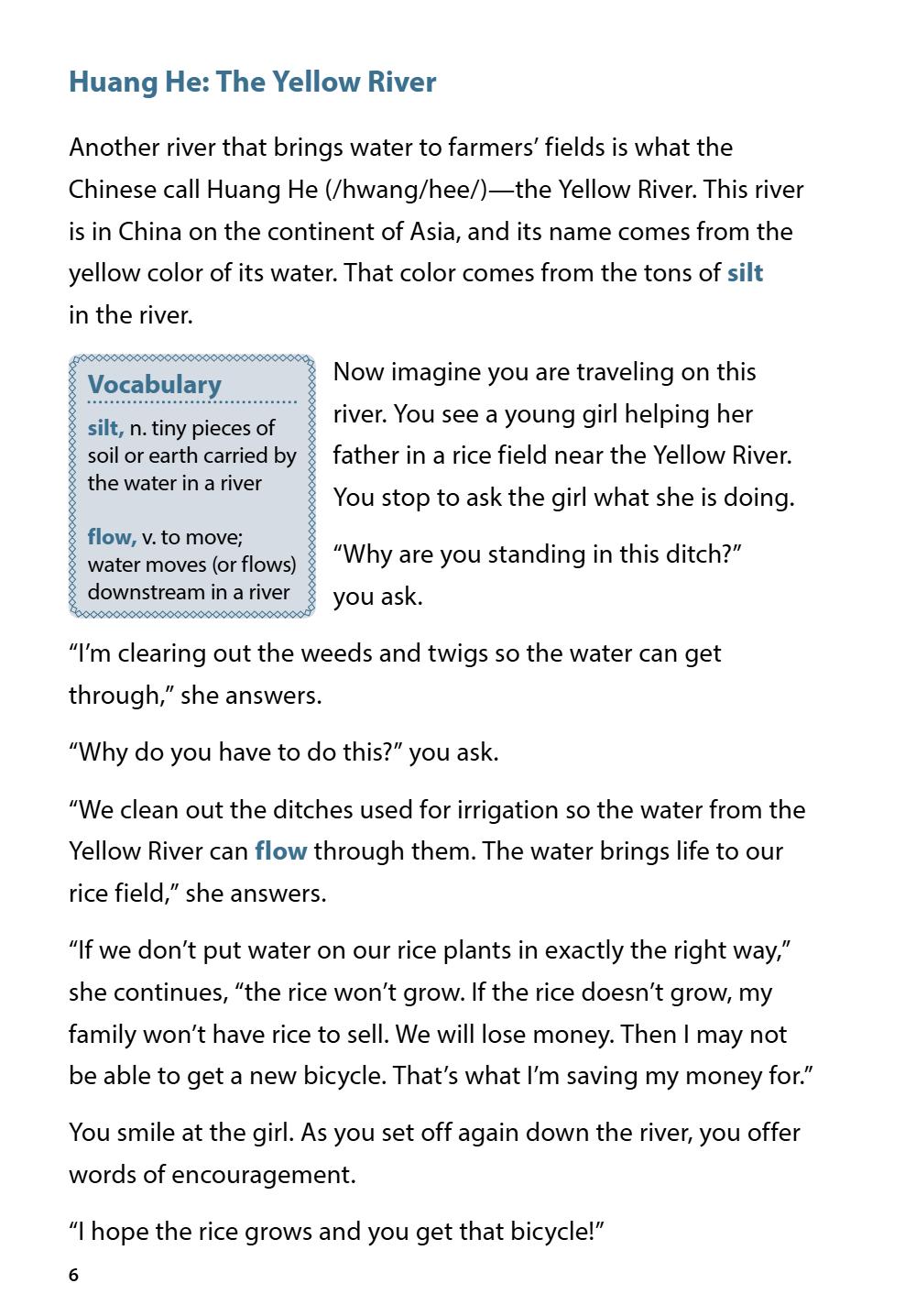
Huang He: The Yellow River
Another river that brings water to farmers’ fields is what the
Chinese call Huang He (/hwang/hee/)—the Yellow River. This river
is in China on the continent of Asia, and its name comes from the
yellow color of its water. That color comes from the tons of silt
in the river.
Vocabulary
silt, n. tiny pieces of
soil or earth carried by
the water in a river
flow, v. to move;
water moves (or flows)
downstream in a river
Now imagine you are traveling on this
river. You see a young girl helping her
father in a rice field near the Yellow River.
You stop to ask the girl what she is doing.
“Why are you standing in this ditch?”
you ask.
“I’m clearing out the weeds and twigs so the water can get
through,” she answers.
“Why do you have to do this?” you ask.
“We clean out the ditches used for irrigation so the water from the
Yellow River can flow through them. The water brings life to our
rice field,” she answers.
“If we don’t put water on our rice plants in exactly the right way,”
she continues, “the rice won’t grow. If the rice doesn’t grow, my
family won’t have rice to sell. We will lose money. Then I may not
be able to get a new bicycle. That’s what I’m saving my money for.”
You smile at the girl. As you set off again down the river, you offer
words of encouragement.
“I hope the rice grows and you get that bicycle!”
6
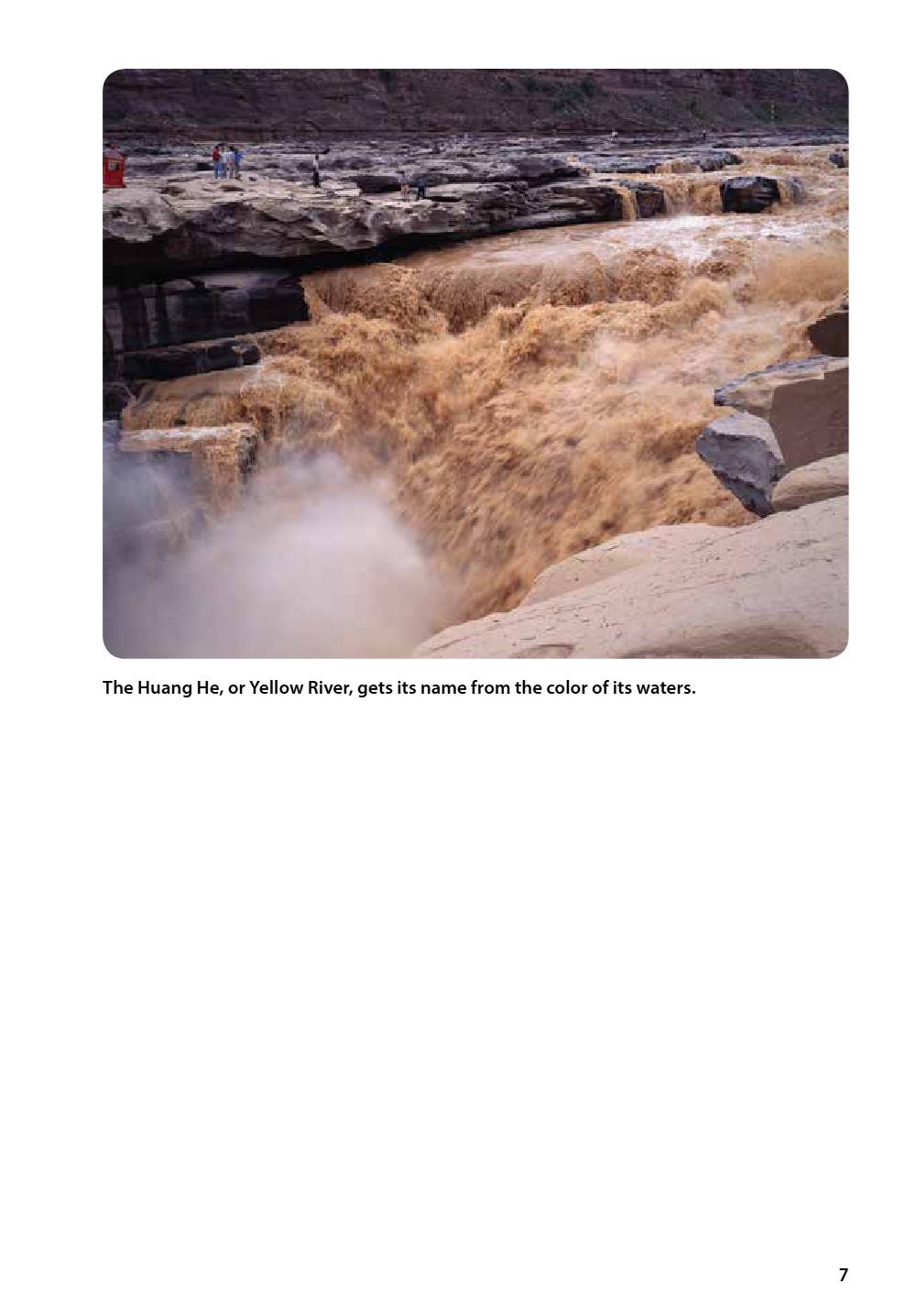
The Huang He, or Yellow River, gets its name from the color of its waters.
7
Talk it over
Ask these as you read or afterward. Answers for the teacher are tucked under each question.
What does Ahmed’s observation that most people in Egypt live near the river tell you about this fact?
Answer
The river provides valuable drinking water to people living in the otherwise dry region.
What role did the Nile River play in the building of the pyramids?
Answer
The river allowed for moving the stone used to build the pyramids.
What helped the farmers of Egypt to grow food for the people of that country?
Answer
They were only able to grow food because of water from the Nile River that was used for irrigation.
How did the Yellow River get its name?
Answer
The water of the river appears yellow as a result of the silt suspended in the river water. Page 7 G3_U1_Chap01_SE.indd 7
What does the story of the young girl tell you about the role of the Yellow River in the lives of people living along its banks?
Answer
The river is important for many reasons. It is used for irrigation so that rice plants grow. Many people, like this young girl’s family, sell rice as a way to make money and make a living.
Check for understanding
- Answer the Big Question out loud or in a sentence or two: Why are crops grown close to the Nile and Yellow Rivers?
What a good answer includes
Key points students should cite in their answers include: These rivers provide water necessary for the growth of crops. The closer crops are grown to the rivers, the easier it is to irrigate the crops with the river water.
- Pick one of today’s words and use it in a sentence of your own.
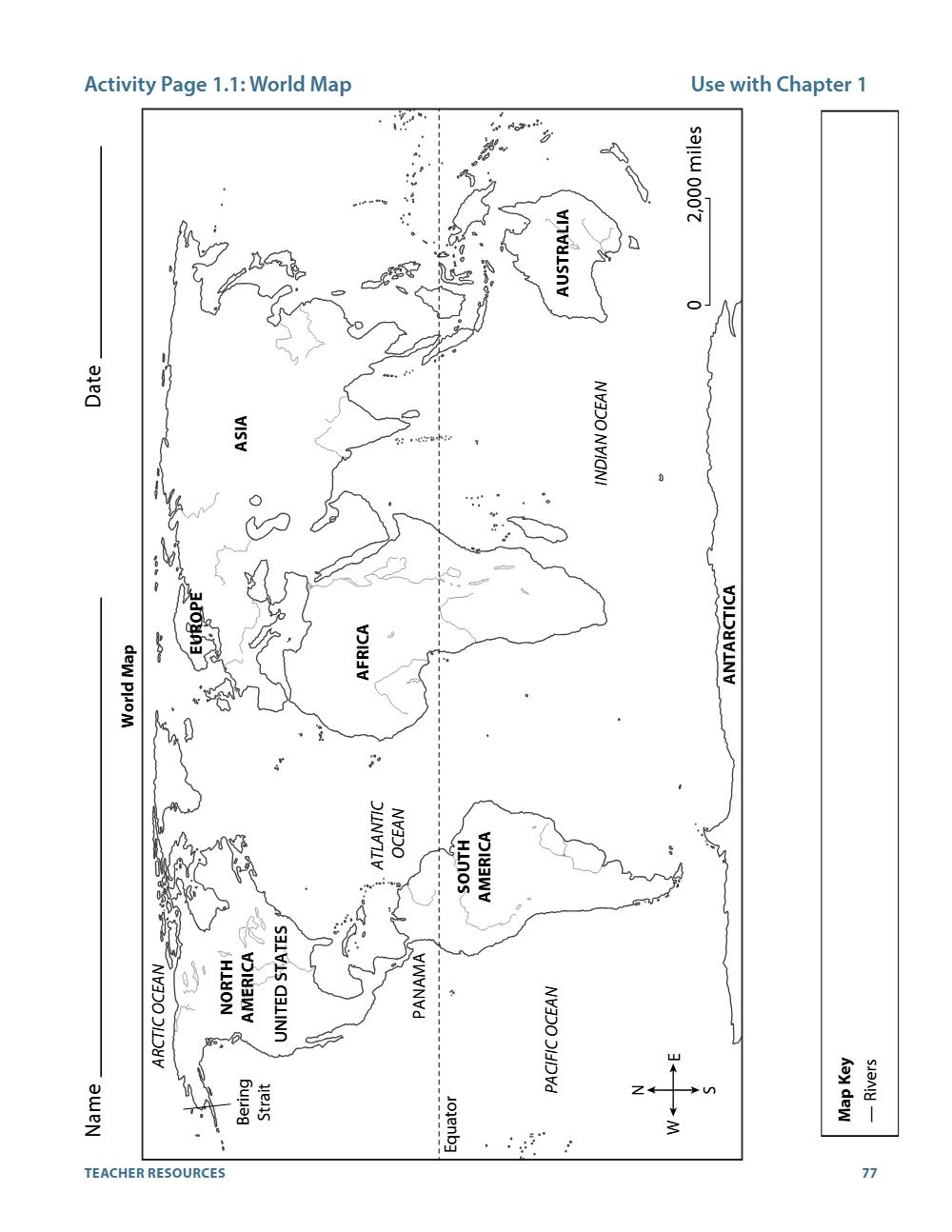
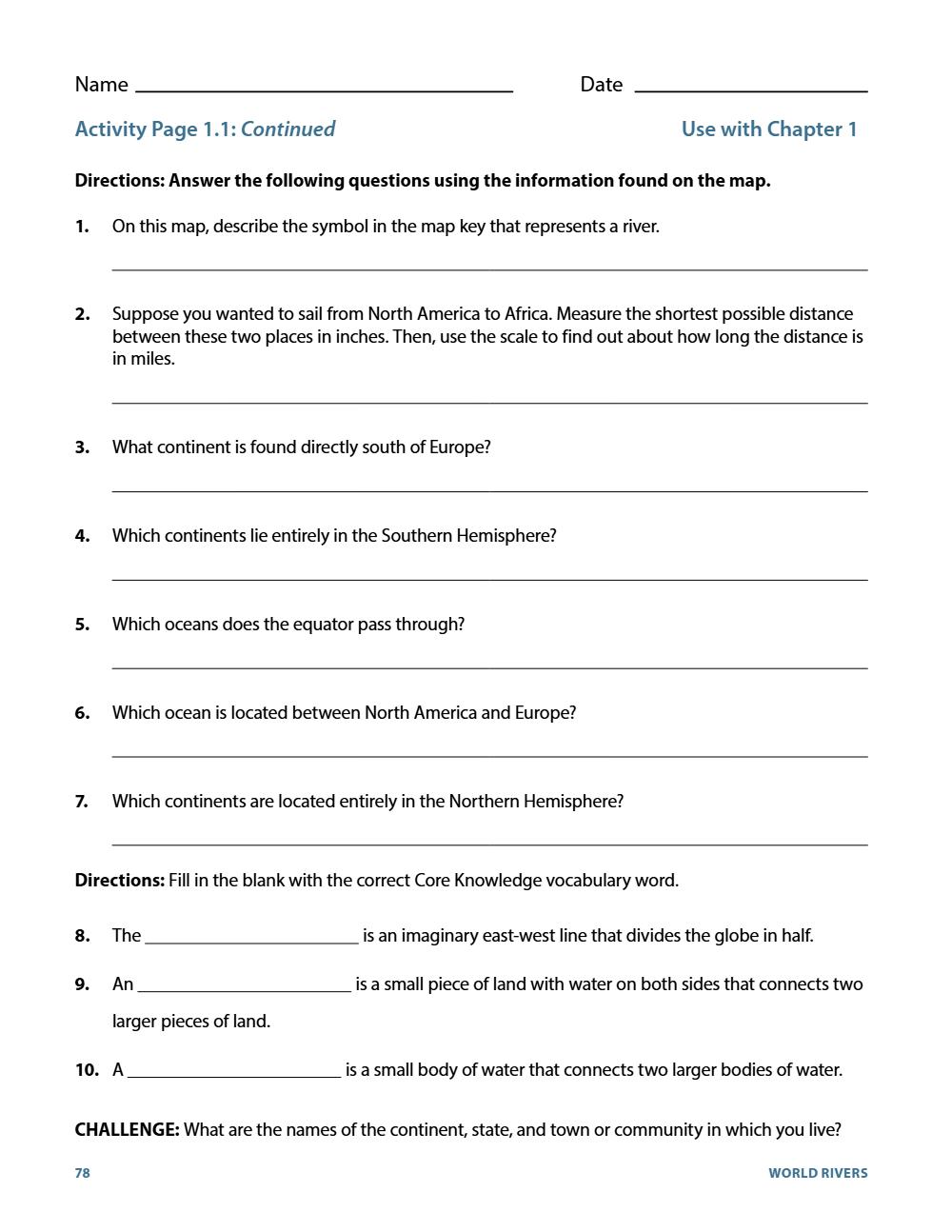
Activity pages
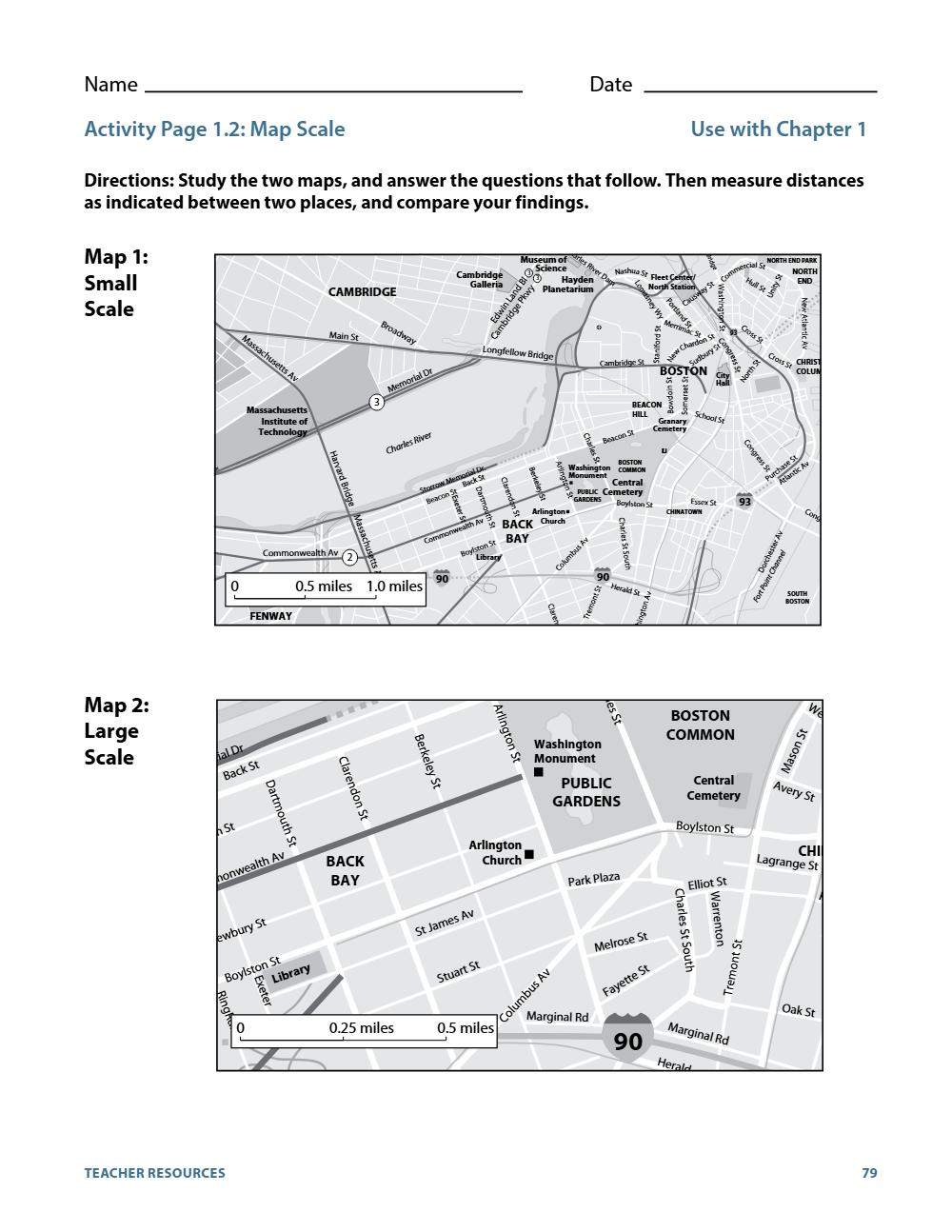
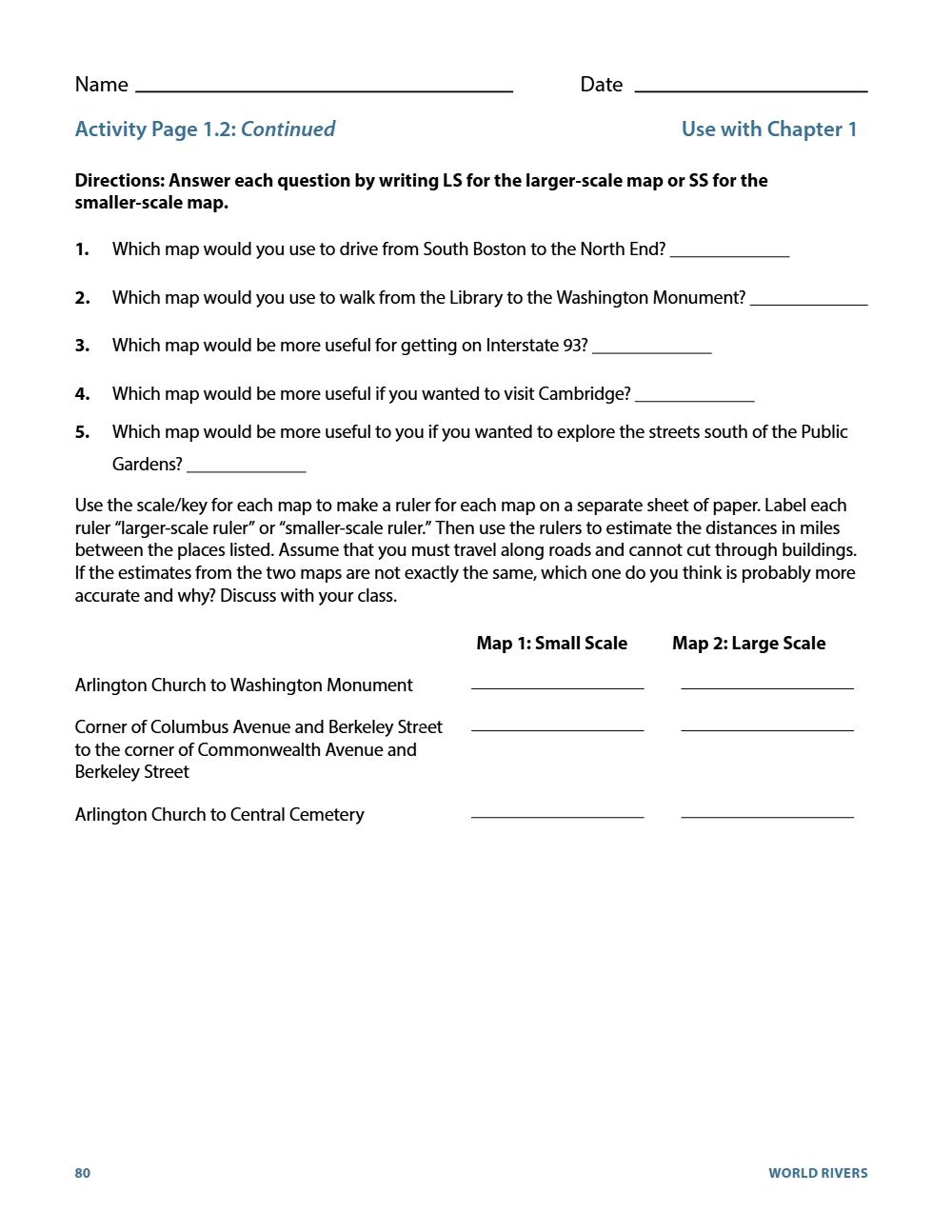
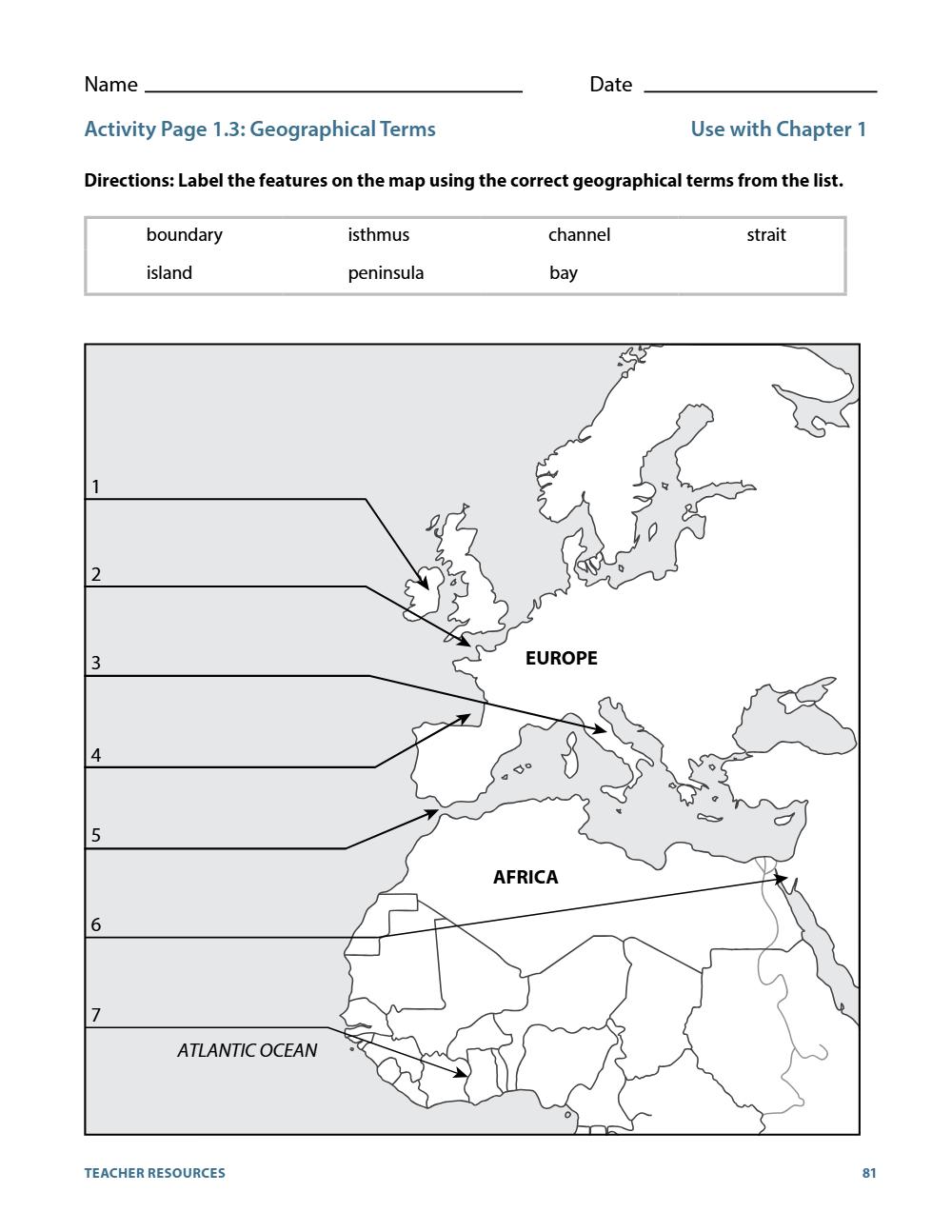
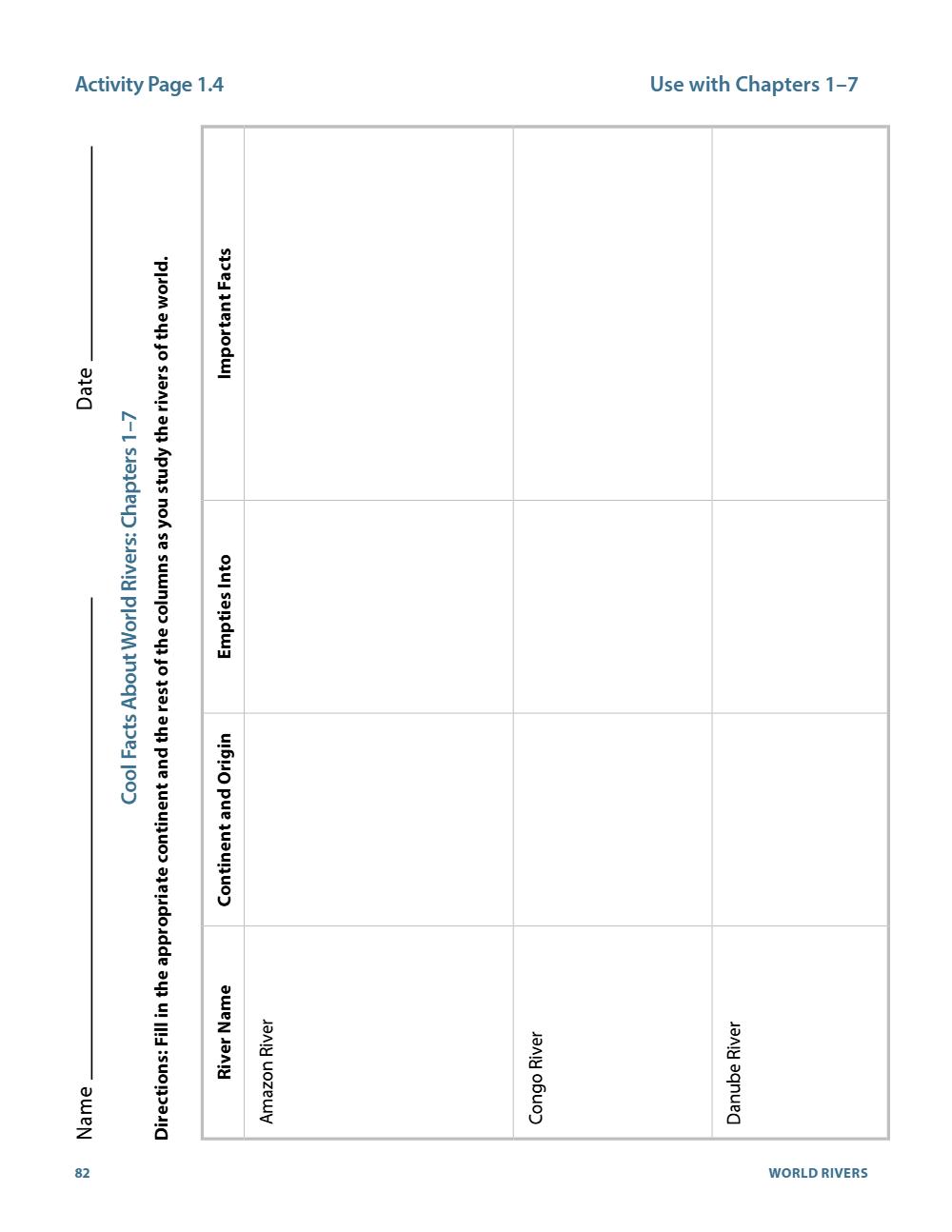
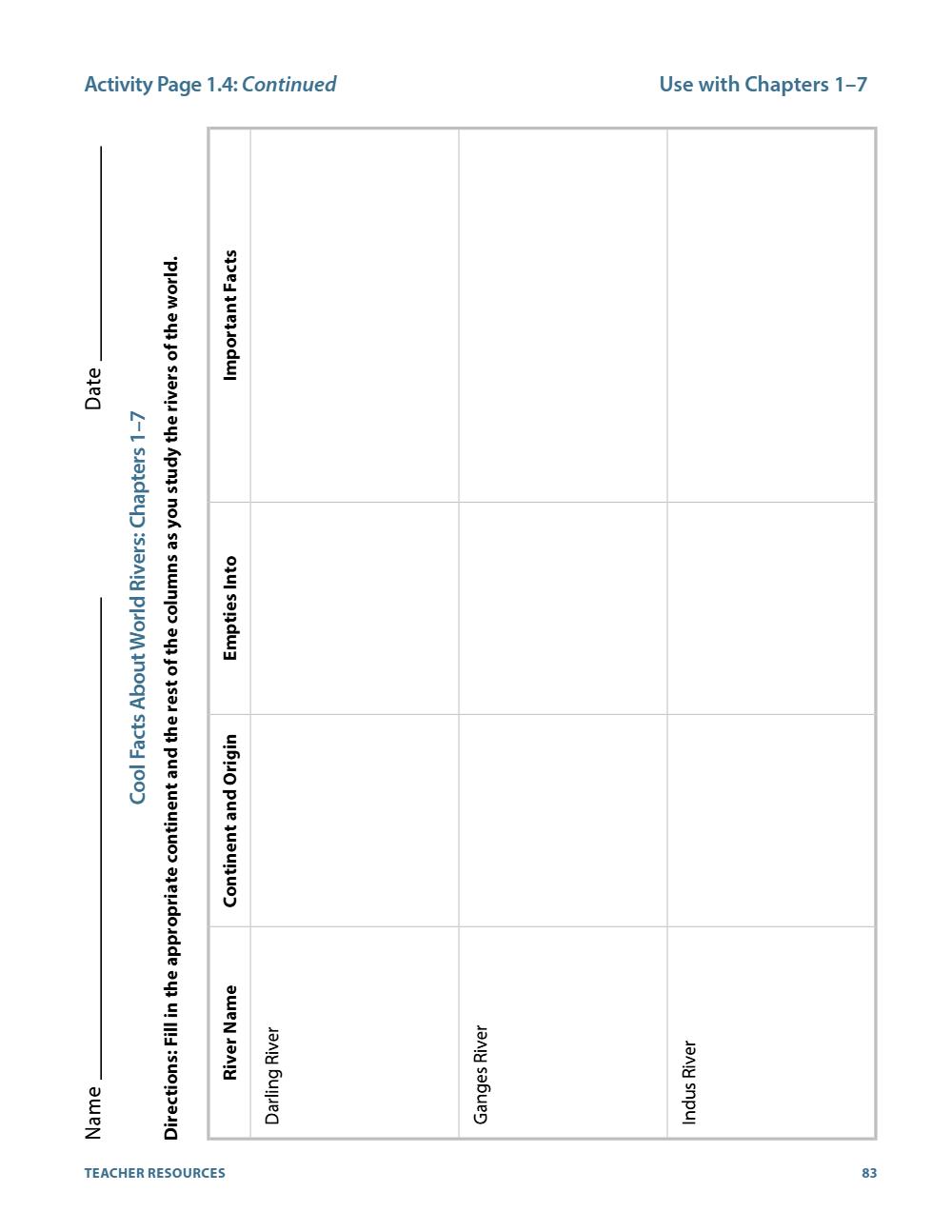
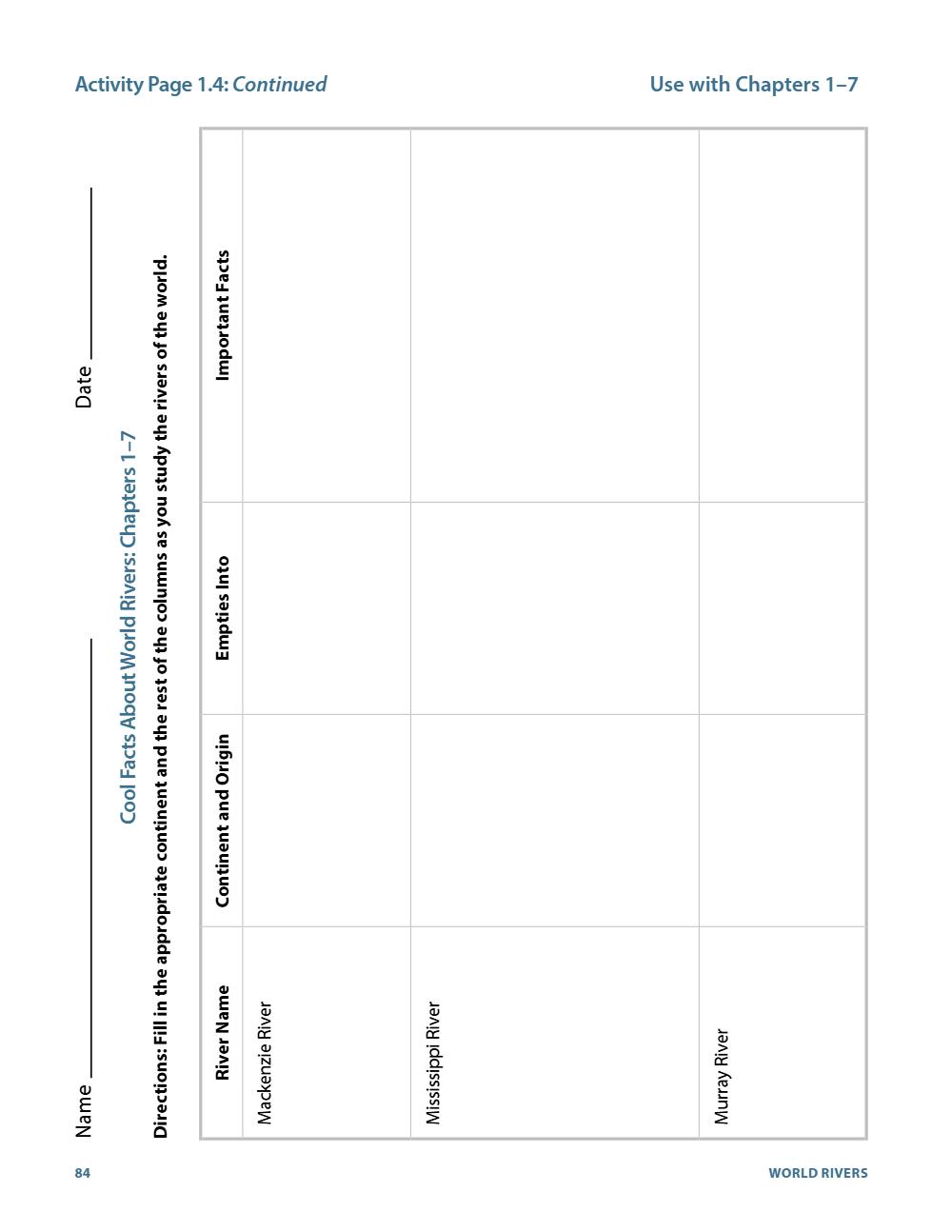
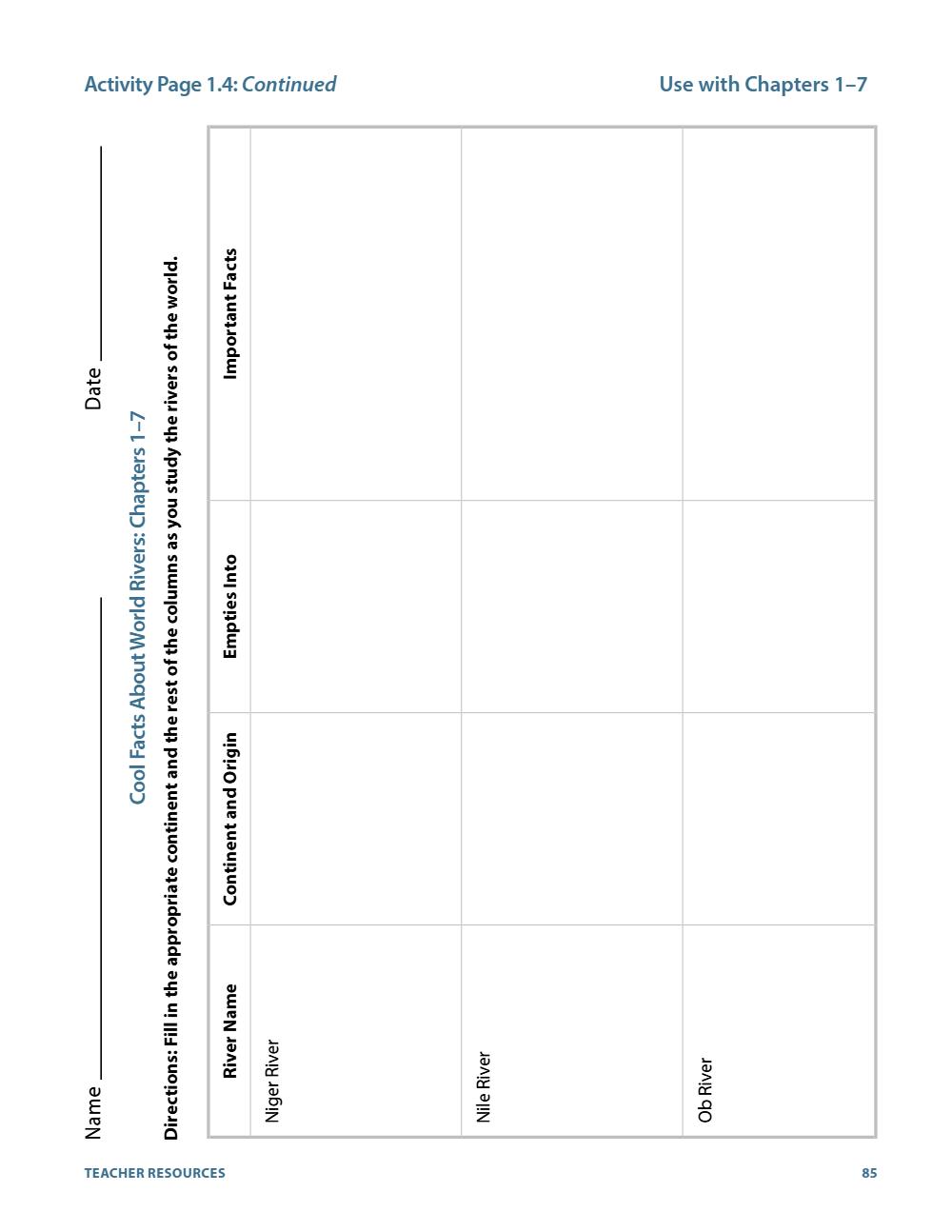
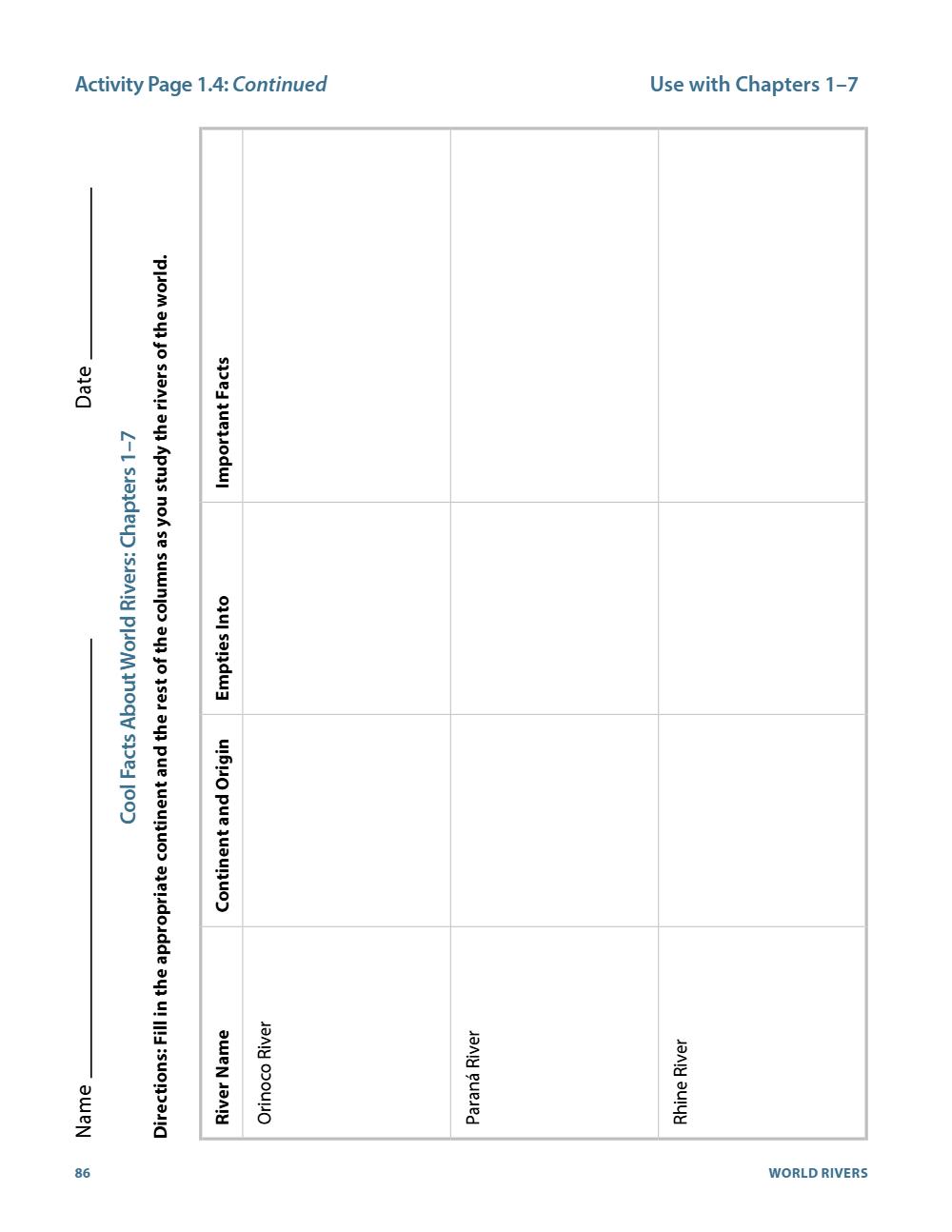
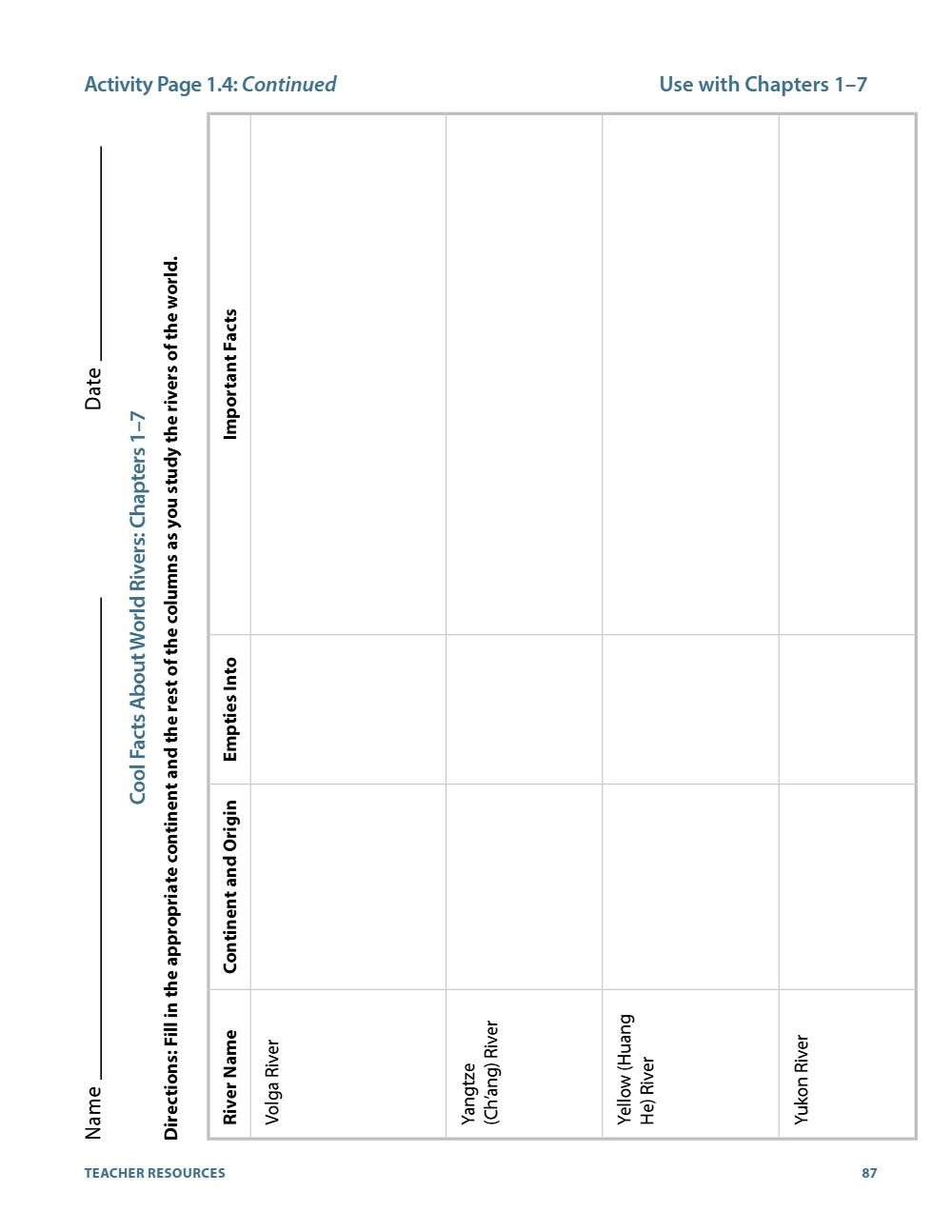
Print these from the Teacher Guide, or have your student answer on paper.
For offline study
Download these once and you can teach this unit without the internet.
This course is based on an original work of the Core Knowledge® Foundation (www.coreknowledge.org) made available through licensing under a Creative Commons Attribution-NonCommercial-ShareAlike 4.0 International License. This does not in any way imply that the Core Knowledge Foundation endorses this work. PGAMO added the lesson pages, study packs and quizzes layout, and shares them under the same license. CC BY-NC-SA 4.0 · Core Knowledge History and Geography. Free for everyone — this course may never be sold.