Start Free Today
Enroll in the Ministerial Bible Study Series — 66 books, 251 lessons, completely free forever.
Enroll Free →Seasonal Foraging Guide
Wild greens, berries, fruit, nuts and mushrooms month by month — where they grow, how to use them, and the look-alikes to watch for.
Meet Our Contributing Authors
Read devotionals and Bible studies shared by members of our community.
Read Their Articles →Best foraging near you right now
What’s in season this month and actually being found within about 50 miles of you.
Your location is rounded to about 7 miles and never saved on our site.
Sightings from iNaturalist research-grade observations. Photos © their photographers via iNaturalist, used under Creative Commons licenses.
Season calendar
| Wild food | Ene | Peb | Mar | Abr | Mayo | Hun | Hul | Ago | Set | Okt | Nov | Dis | |
|---|---|---|---|---|---|---|---|---|---|---|---|---|---|
| Morel mushrooms | |||||||||||||
| Chanterelles | |||||||||||||
| Chicken of the woods | |||||||||||||
| Hen of the woods (maitake) |
Typical seasons for the eastern and central United States. Farther south things come in earlier; farther north and higher up, later.
What to look for
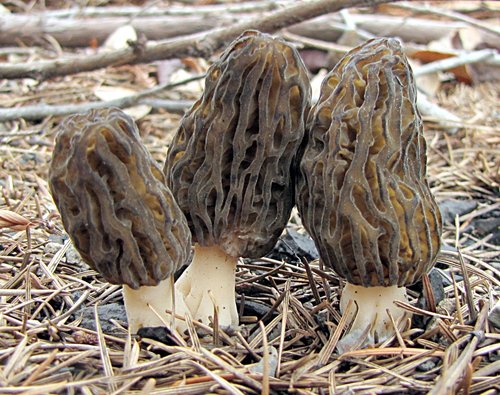
Mushrooms · Marso–Mayo
Morel mushrooms
Morchella
Where: Woods edges, around dying elms, ash and old apple orchards, once the soil warms to about 50°F.
Look-alikes & cautions: False morels are poisonous. A true morel is completely hollow from tip to stem when sliced lengthwise, and the cap is attached at the bottom. Always cook — never eat raw.
Use: Sauté, fry or dry
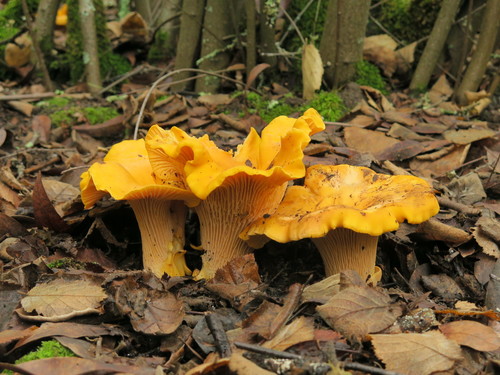
Mushrooms · Hunyo–Setyembre
Chanterelles
Cantharellus
Where: Hardwood forests (oak, beech) on the ground after summer rains.
Look-alikes & cautions: Jack-o’-lantern mushrooms are poisonous: they grow in clusters on wood and have sharp, true gills. Chanterelles grow singly from soil with blunt, forked ridges and pale, stringy flesh inside.
Use: Sauté; freeze after cooking
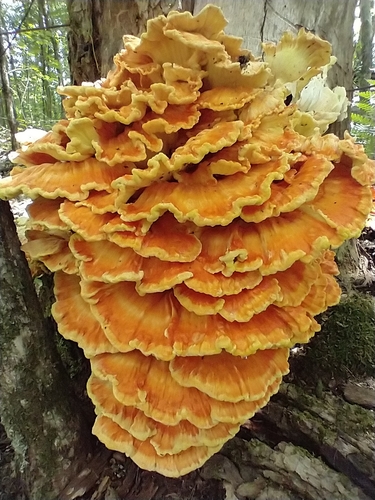
Mushrooms · Hunyo–Oktubre
Chicken of the woods
Laetiporus
Where: Bright orange-yellow shelves on living or dead oaks and other hardwoods.
Look-alikes & cautions: Cook thoroughly. Some people react, especially to ones growing on conifers, eucalyptus or locust — try a small amount first. Pick the tender outer edges.
Use: Cook like chicken; freeze after cooking
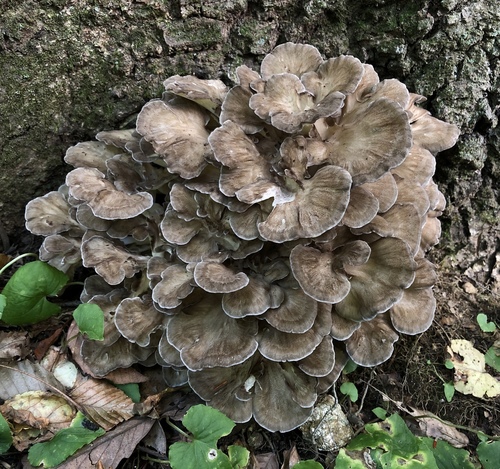
Mushrooms · Setyembre–Oktubre
Hen of the woods (maitake)
Grifola frondosa
Where: Clusters at the base of oak trees in early fall, often the same tree every year.
Look-alikes & cautions: Check the underside has tiny pores, not gills. The black-staining polypore looks similar and is edible but tough.
Use: Roast, sauté, dry or freeze
Learn With Others
The best way to learn wild foods is alongside someone who knows them. Ask for identification help in the Foraging group — post clear photos of every part of the plant or mushroom — and never eat anything on an online ID alone.