Grade 8 Science
Study Bibles 26
Reading: Science Literacy Preface: Put Yourself in This Scene
This is a Science Literacy reading. Students read it on their own over about a week, alongside the investigation lessons, then do the exercise page and talk it over.
Words to know
- energy
- the capacity to do work
- gravity
- the force that tends to cause physical objects to move toward each other based on mass
- mass
- a measure of the amount of matter in an object; a measure of the amount of inertia in an object
- speed
- rate of motion
Teacher’s plan for this reading
Read this first: the steps, materials, timing and discussion questions, straight from the Teacher Guide.
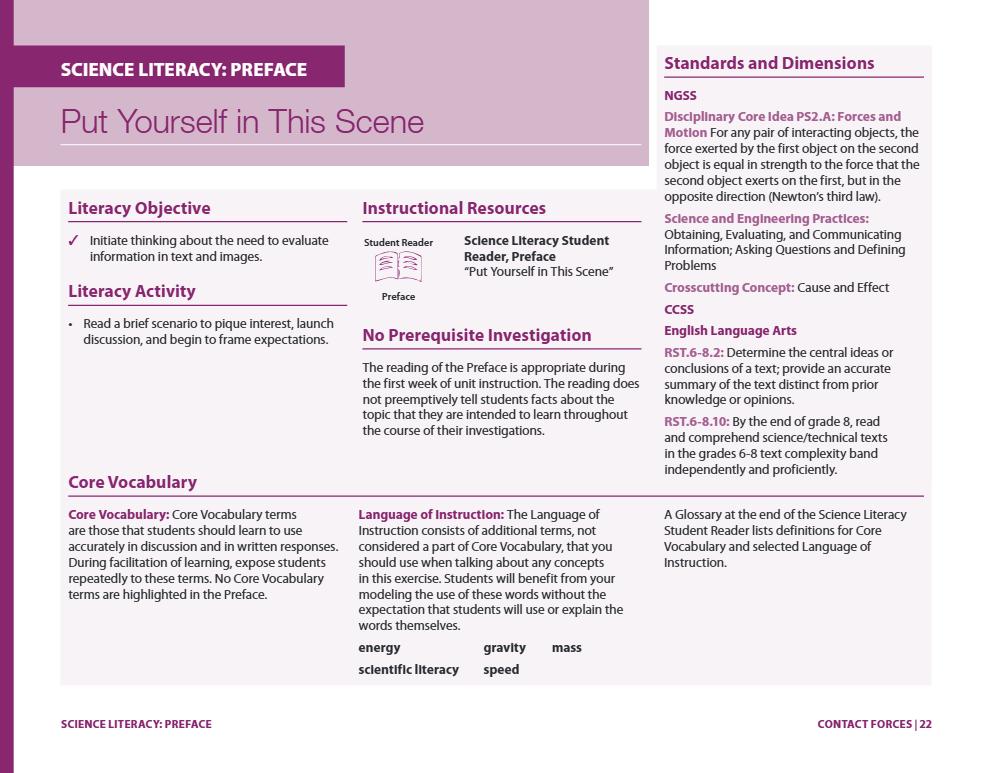
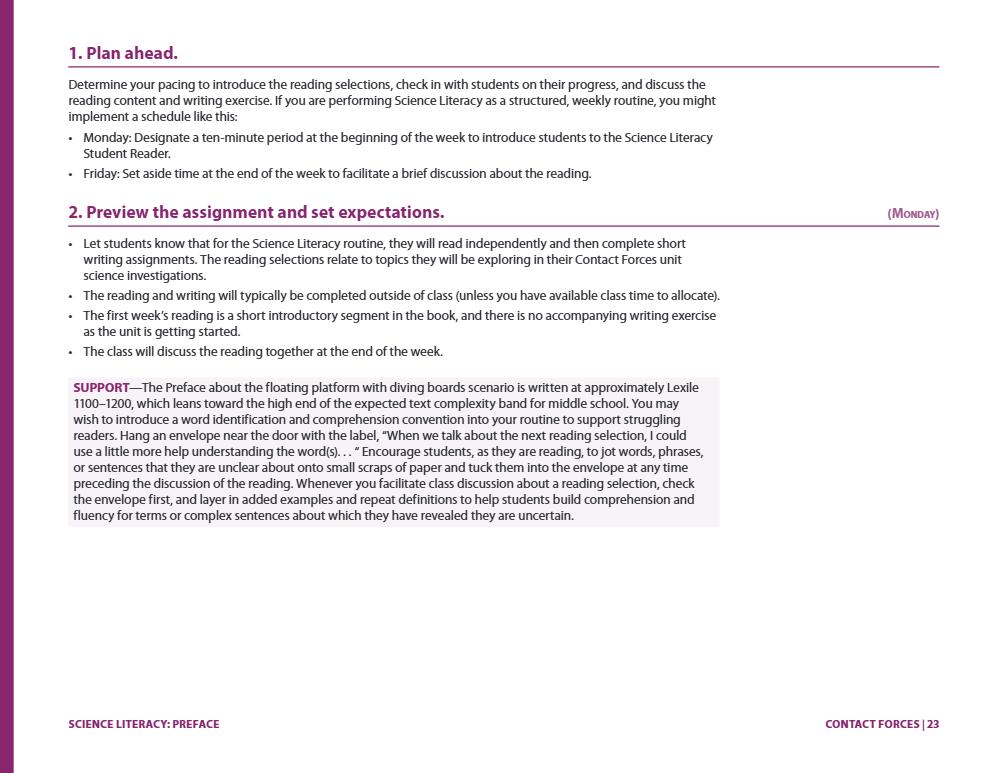
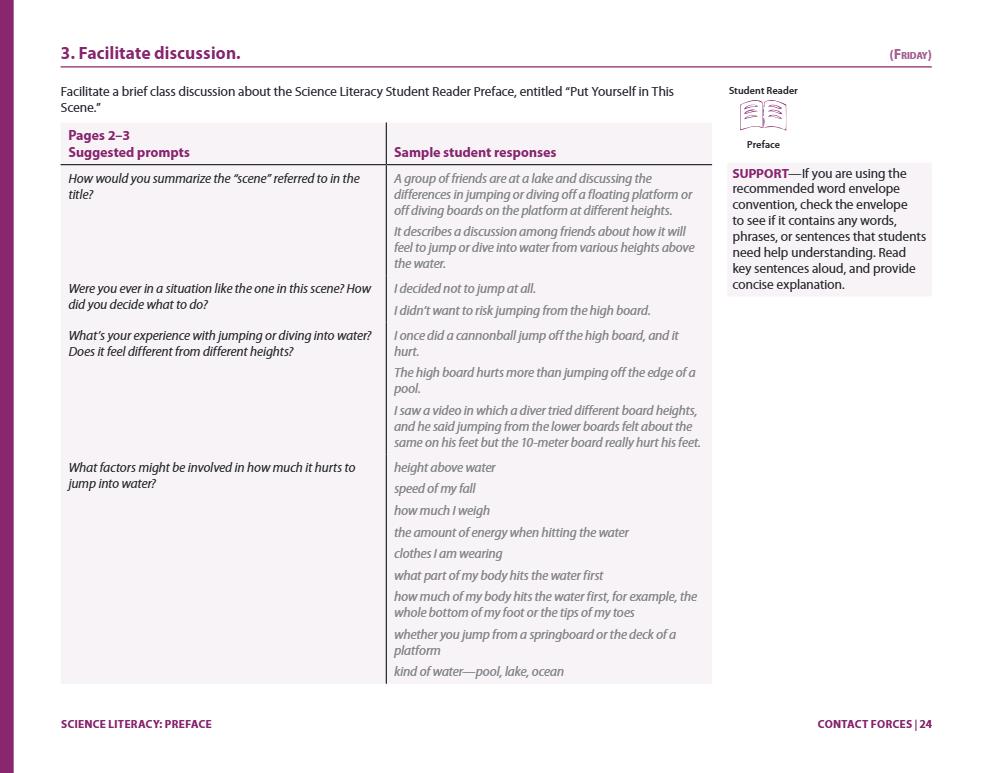
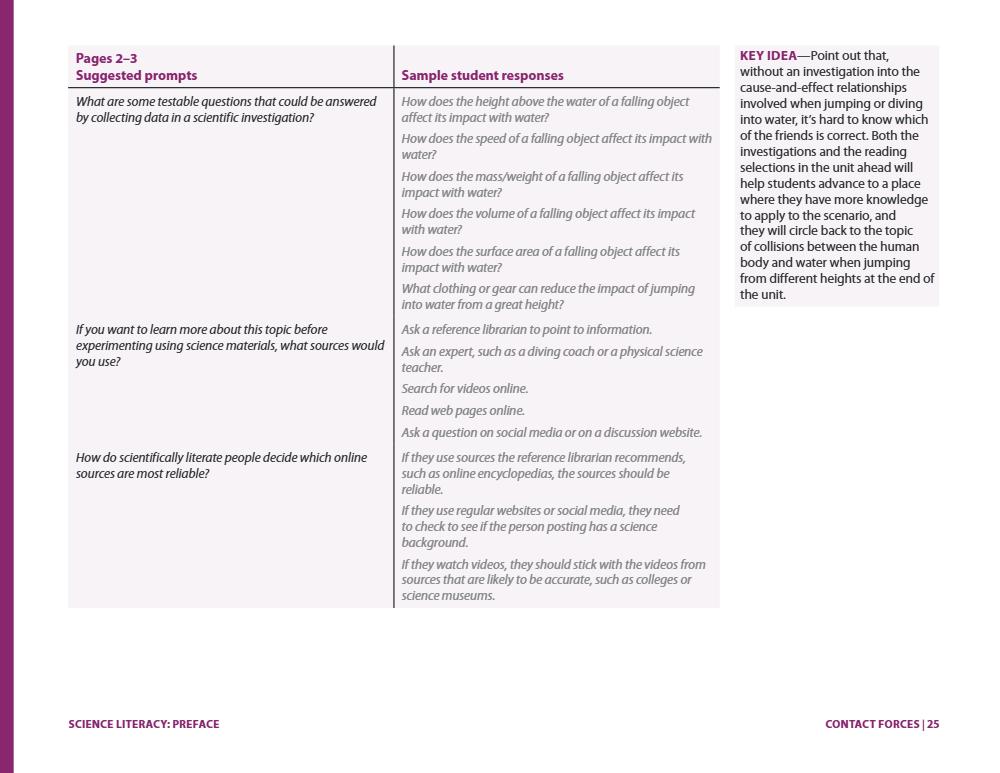
Read: Science Literacy Student Reader, Preface: “Put Yourself in This Scene”
Read it aloud together, or let your student read on their own. Pictures and maps are part of the lesson — talk about them too.
Text version (for read-aloud apps and screen readers)
Put Yourself in This Scene
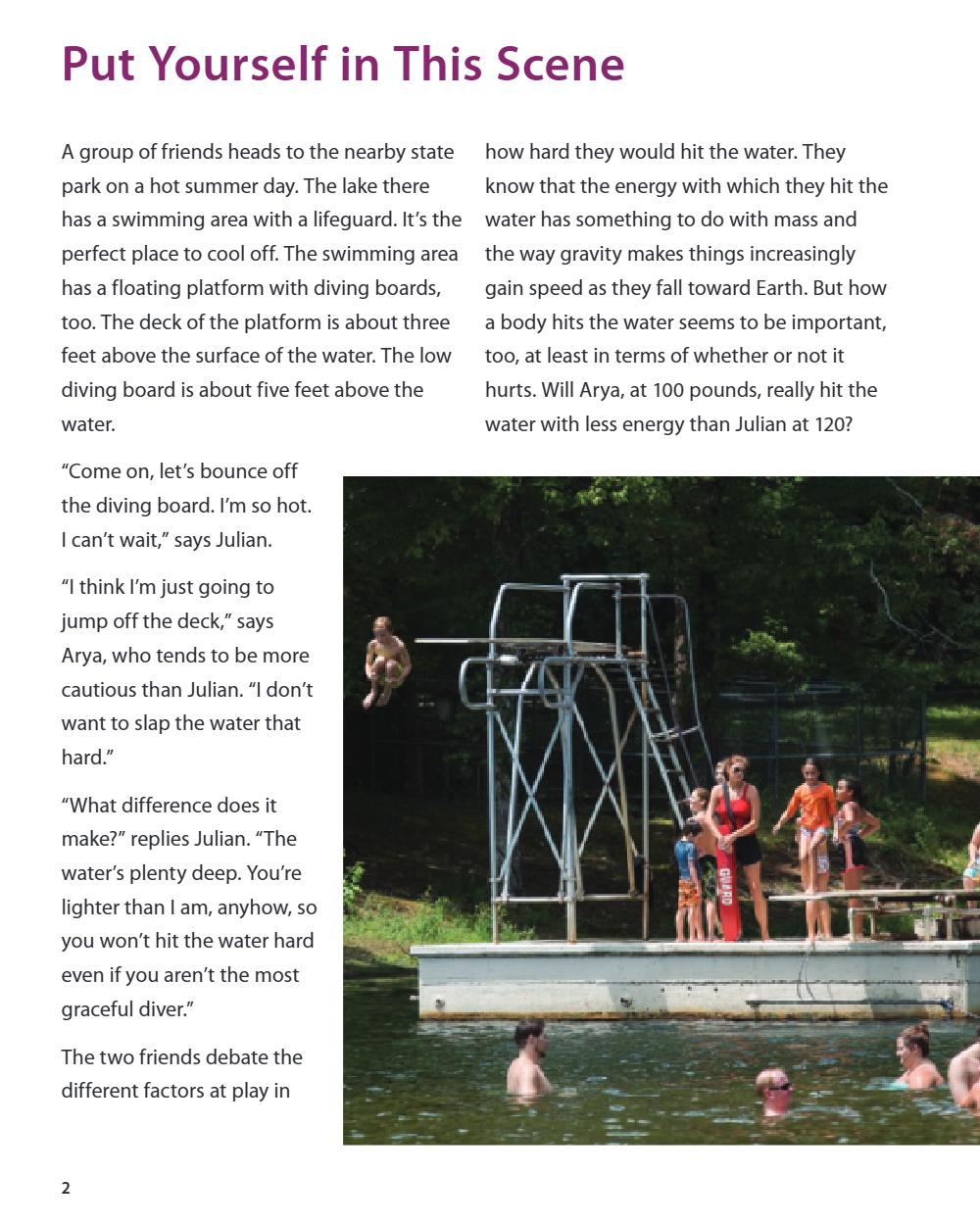
A group of friends heads to the nearby state
how hard they would hit the water. They
park on a hot summer day. The lake there
know that the energy with which they hit the
has a swimming area with a lifeguard. It’s the
water has something to do with mass and
perfect place to cool off. The swimming area
the way gravity makes things increasingly
has a floating platform with diving boards,
gain speed as they fall toward Earth. But how
too. The deck of the platform is about three
a body hits the water seems to be important,
feet above the surface of the water. The low
too, at least in terms of whether or not it
diving board is about five feet above the
hurts. Will Arya, at 100 pounds, really hit the
water.
water with less energy than Julian at 120?
“Come on, let’s bounce off
the diving board. I’m so hot.
I can’t wait,” says Julian.
“I think I’m just going to
jump off the deck,” says
Arya, who tends to be more
cautious than Julian. “I don’t
want to slap the water that
hard.”
“What difference does it
make?” replies Julian. “The
water’s plenty deep. You’re
lighter than I am, anyhow, so
you won’t hit the water hard
even if you aren’t the most
graceful diver.”
The two friends debate the
different factors at play in
2
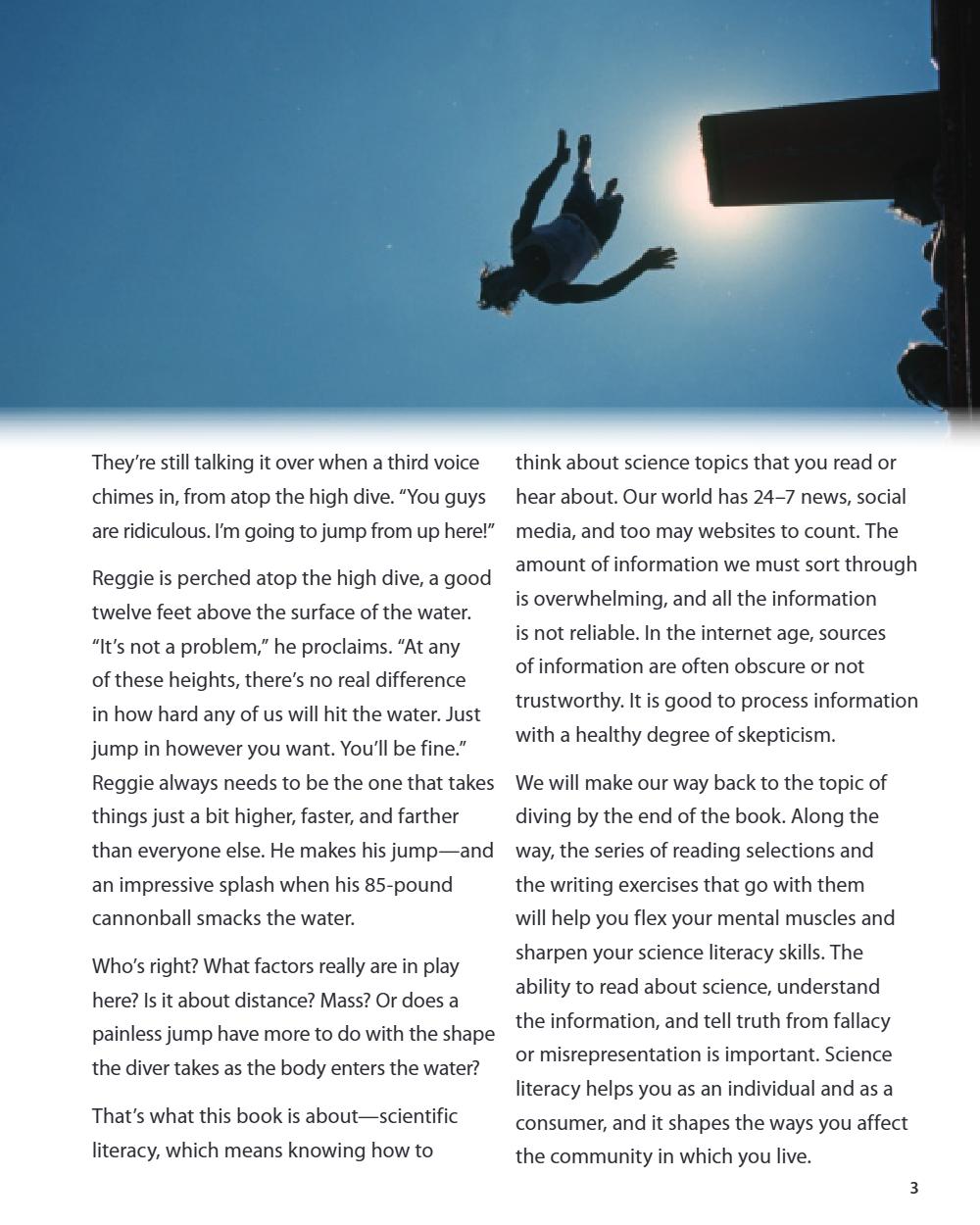
They’re still talking it over when a third voice
think about science topics that you read or
chimes in, from atop the high dive. “You guys
hear about. Our world has 24–7 news, social
are ridiculous. I’m going to jump from up here!” media, and too may websites to count. The
Reggie is perched atop the high dive, a good
twelve feet above the surface of the water.
“It’s not a problem,” he proclaims. “At any
of these heights, there’s no real difference
in how hard any of us will hit the water. Just
jump in however you want. You’ll be fine.”
amount of information we must sort through
is overwhelming, and all the information
is not reliable. In the internet age, sources
of information are often obscure or not
trustworthy. It is good to process information
with a healthy degree of skepticism.
Reggie always needs to be the one that takes We will make our way back to the topic of
things just a bit higher, faster, and farther
diving by the end of the book. Along the
than everyone else. He makes his jump—and
way, the series of reading selections and
an impressive splash when his 85-pound
the writing exercises that go with them
cannonball smacks the water.
will help you flex your mental muscles and
Who’s right? What factors really are in play
here? Is it about distance? Mass? Or does a
painless jump have more to do with the shape
the diver takes as the body enters the water?
sharpen your science literacy skills. The
ability to read about science, understand
the information, and tell truth from fallacy
or misrepresentation is important. Science
literacy helps you as an individual and as a
That’s what this book is about—scientific
consumer, and it shapes the ways you affect
literacy, which means knowing how to
the community in which you live.
3
Check for understanding
- Pick one of today’s words and use it in a sentence of your own.
For offline study
Download these once and you can teach this unit without the internet.
CKSci 6–8 was originally developed and authored by OpenSciEd (www.openscied.org), licensed under a Creative Commons Attribution 4.0 International License (CC BY 4.0). Additions marked “Core Knowledge Science Literacy” are the work of the Core Knowledge® Foundation (www.coreknowledge.org), made available through licensing under a Creative Commons Attribution-NonCommercial-ShareAlike 4.0 International License. This does not in any way imply that OpenSciEd or the Core Knowledge Foundation endorses this work. PGAMO added the lesson pages, study packs and quizzes layout, and shares them under the same license. CC BY-NC-SA 4.0 · Core Knowledge Science (OpenSciEd). Free for everyone — this course may never be sold.