Grade 6 Science
Study Bibles 26
Reading: Science Literacy Preface: Put Yourself in This Scene
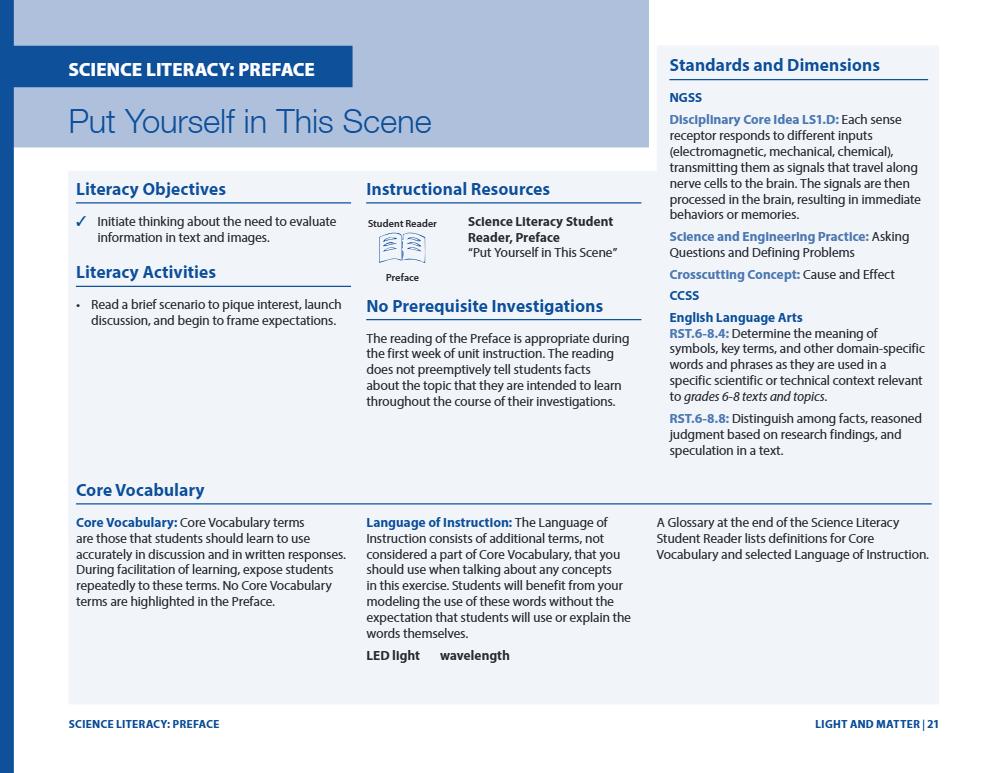
This is a Science Literacy reading. Students read it on their own over about a week, alongside the investigation lessons, then do the exercise page and talk it over.
Words to know
- light
- visible electromagnetic radiation
Teacher’s plan for this reading
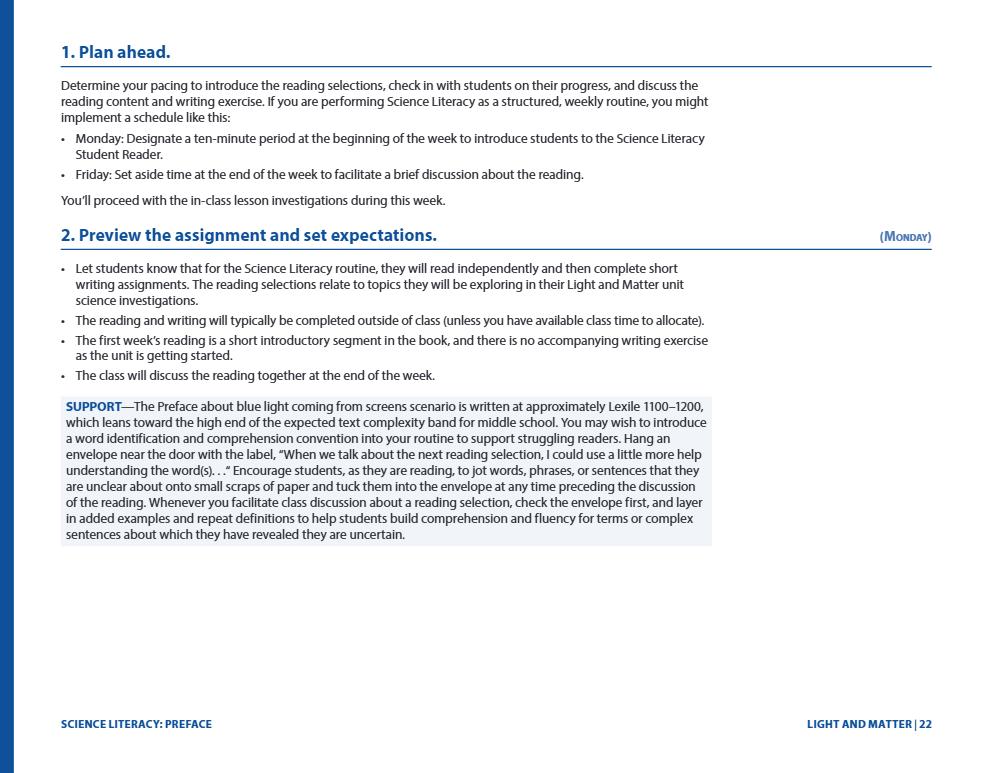
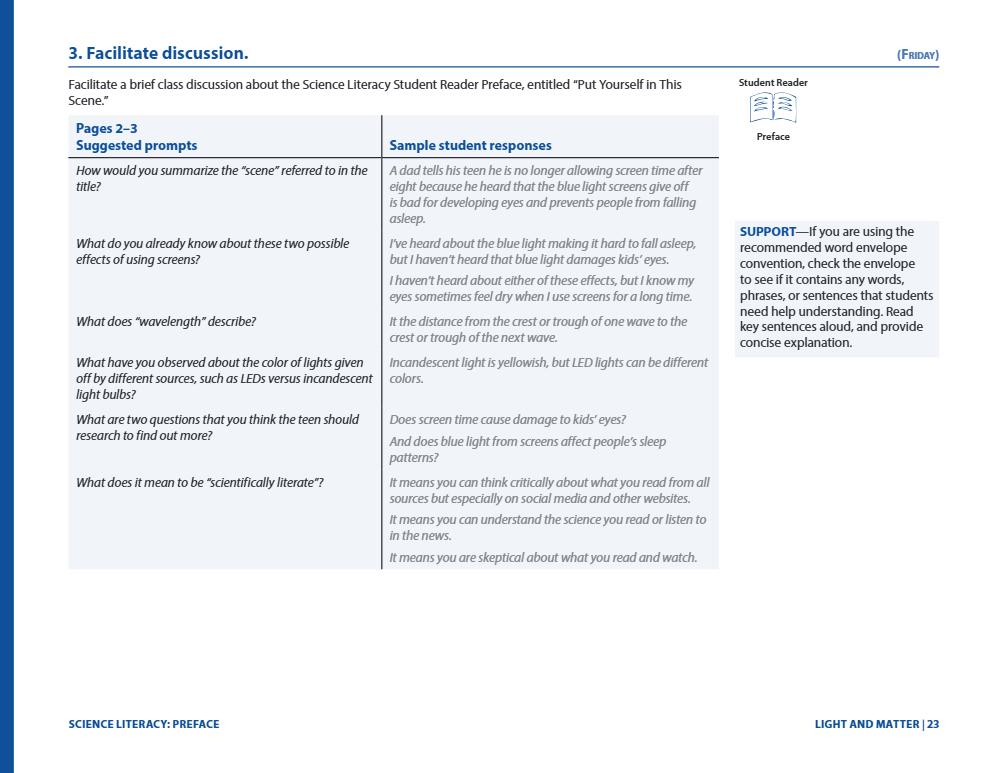
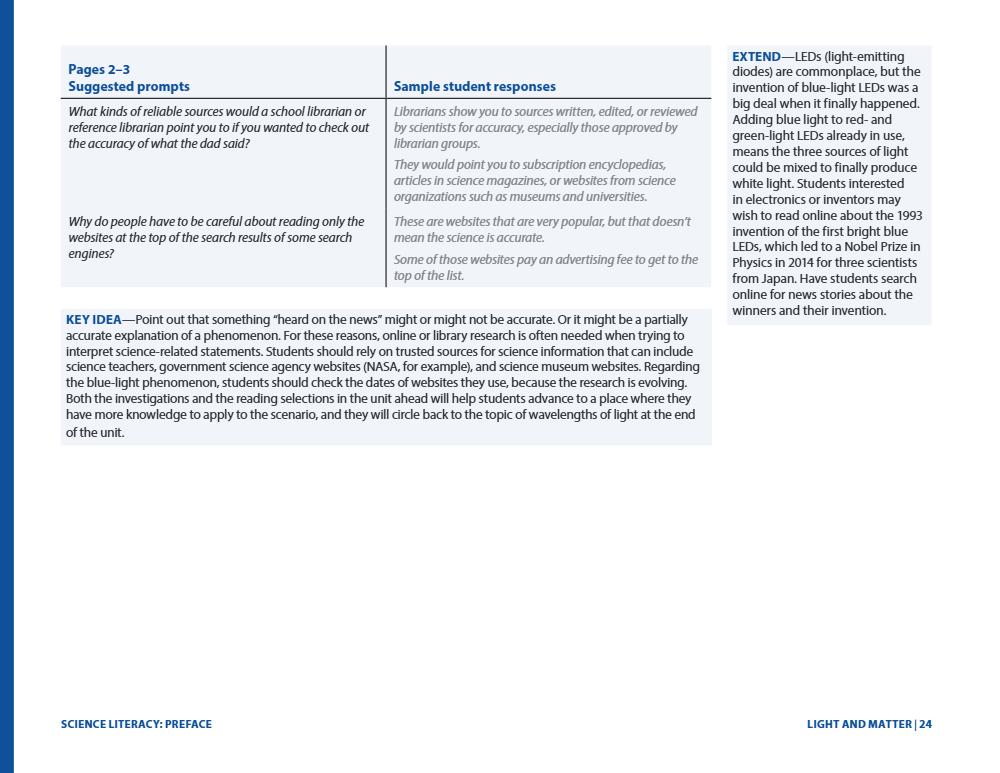
Read this first: the steps, materials, timing and discussion questions, straight from the Teacher Guide.
Read: Science Literacy Student Reader, Preface: “Put Yourself in This Scene”
Read it aloud together, or let your student read on their own. Pictures and maps are part of the lesson — talk about them too.
Text version (for read-aloud apps and screen readers)
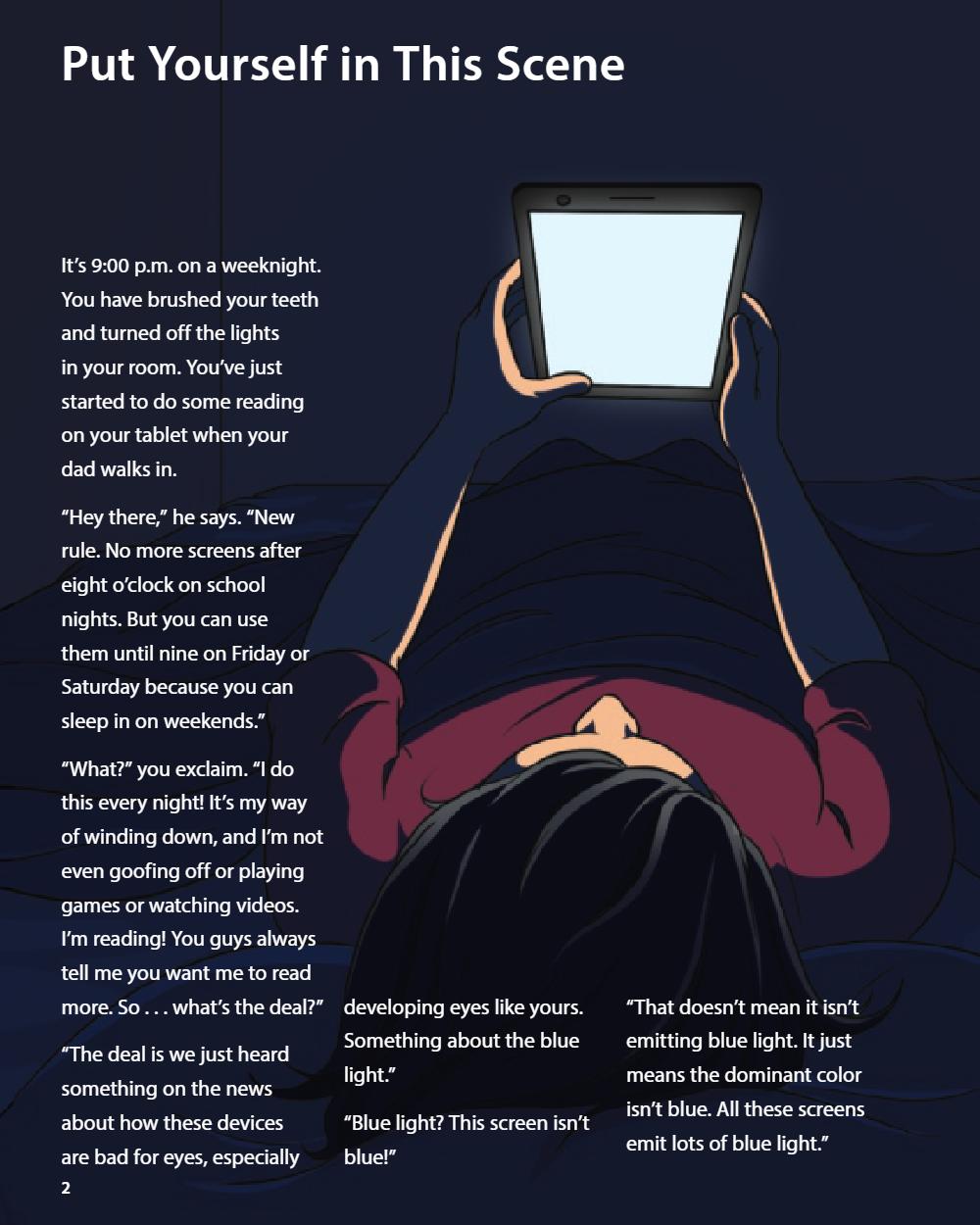
Put Yourself in This Scene
It’s 9:00 p.m. on a weeknight.
You have brushed your teeth
and turned off the lights
in your room. You’ve just
started to do some reading
on your tablet when your
dad walks in.
“Hey there,” he says. “New
rule. No more screens after
eight o’clock on school
nights. But you can use
them until nine on Friday or
Saturday because you can
sleep in on weekends.”
“What?” you exclaim. “I do
this every night! It’s my way
of winding down, and I’m not
even goofing off or playing
games or watching videos.
I’m reading! You guys always
tell me you want me to read
more. So . . . what’s the deal?” developing eyes like yours.
“That doesn’t mean it isn’t
Something about the blue
emitting blue light. It just
light.”
means the dominant color
“The deal is we just heard
something on the news
about how these devices
“Blue light? This screen isn’t
are bad for eyes, especially
blue!”
2
isn’t blue. All these screens
emit lots of blue light.”
But this screen isn’t blue! It’s mostly white,
on the news doesn’t mean it was right or
like the page of a book!”
that they interpreted it correctly. You’ll get
Your dad continues:
on the internet to trace where they heard
this . . . but you realize it’ll have to wait until
“Think about the sunlight that’ll come in
tomorrow, because you can’t get on the
here in the morning. It probably will seem
internet without a screen.
white or yellow, but it has all the different
wavelengths of light, including blue. The
screen of your tablet and my phone and
Mom’s phone and our computers and the
screen on the dashboard of the car are all
giving off a lot of light, blue included. And
we just heard that it’s bad for your eyes. It
also makes it harder for you to get to sleep.
So, the new rule is you turn off your tablet
and other devices by eight on school nights
so you have a better night’s sleep and your
eyes aren’t shot by the time you get to be
my age.”
That’s what this book is about—scientific
literacy, which means knowing how to think
about science topics that you read or hear
about. Our world has 24-7 news, social media,
and too many websites to count. The amount
of information we have to sort through is
overwhelming, and all the information is
not reliable. In the internet age, sources
of information are often obscure or not
trustworthy. It is good to process information
with a healthy degree of skepticism. We
will make our way back to this blue light
topic by the end of the book. Along the
This doesn’t seem fair. You ask, “What about
way, the series of reading selections and
you? Are you guys gonna stop watching TV
the writing exercises that go with them
and put down your phones at eight o’clock?”
will help you flex your mental muscles and
“It is much more important when you are
sharpen your science literacy skills. The
young.”
ability to read about science, understand
“NO FAIR!”
“Sorry! Goodnight!”
You plan to get to the bottom of this. Just
because your parents heard something
the information, and tell truth from fallacy or
misrepresentation is really important. Science
literacy helps you as an individual and as a
consumer, and it shapes the ways you affect
the community in which you live.
3
Check for understanding
- Pick one of today’s words and use it in a sentence of your own.
For offline study
Download these once and you can teach this unit without the internet.
CKSci 6–8 was originally developed and authored by OpenSciEd (www.openscied.org), licensed under a Creative Commons Attribution 4.0 International License (CC BY 4.0). Additions marked “Core Knowledge Science Literacy” are the work of the Core Knowledge® Foundation (www.coreknowledge.org), made available through licensing under a Creative Commons Attribution-NonCommercial-ShareAlike 4.0 International License. This does not in any way imply that OpenSciEd or the Core Knowledge Foundation endorses this work. PGAMO added the lesson pages, study packs and quizzes layout, and shares them under the same license. CC BY-NC-SA 4.0 · Core Knowledge Science (OpenSciEd). Free for everyone — this course may never be sold.