Grade 5 Reading & Writing
Study Bibles 26
Lesson 1: Reading “border kid?”, “Border Kid” and “Checkpoint”
For parents: This unit reads They Call Me Güero. The book is not included here: borrow it from your library or buy a copy before you start (Core Knowledge lists it on the unit page).
One lesson is about a school day of language arts (60–90 minutes): reading, then writing, grammar, morphology or spelling. Read the teacher’s lesson plan first; you can split a long lesson over two days.
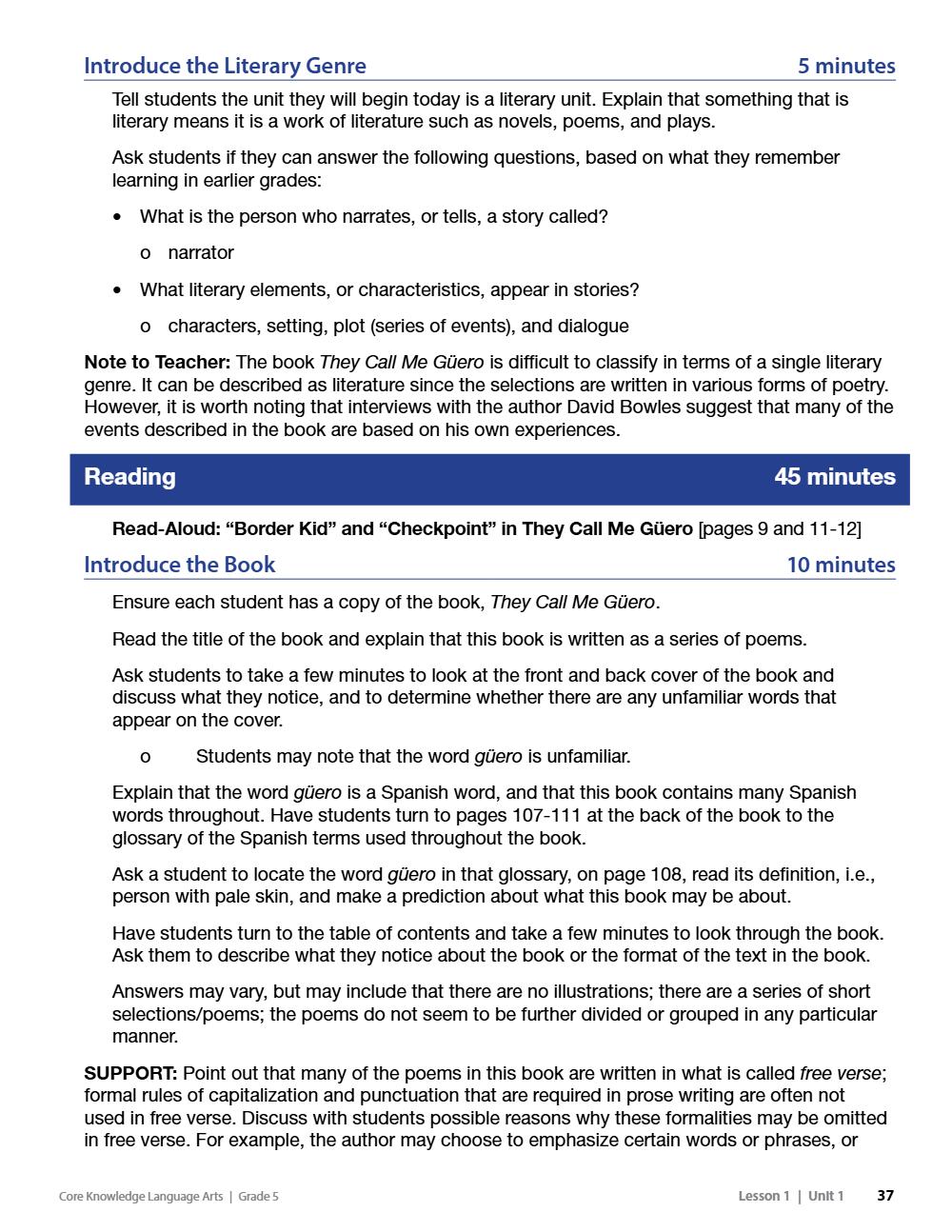
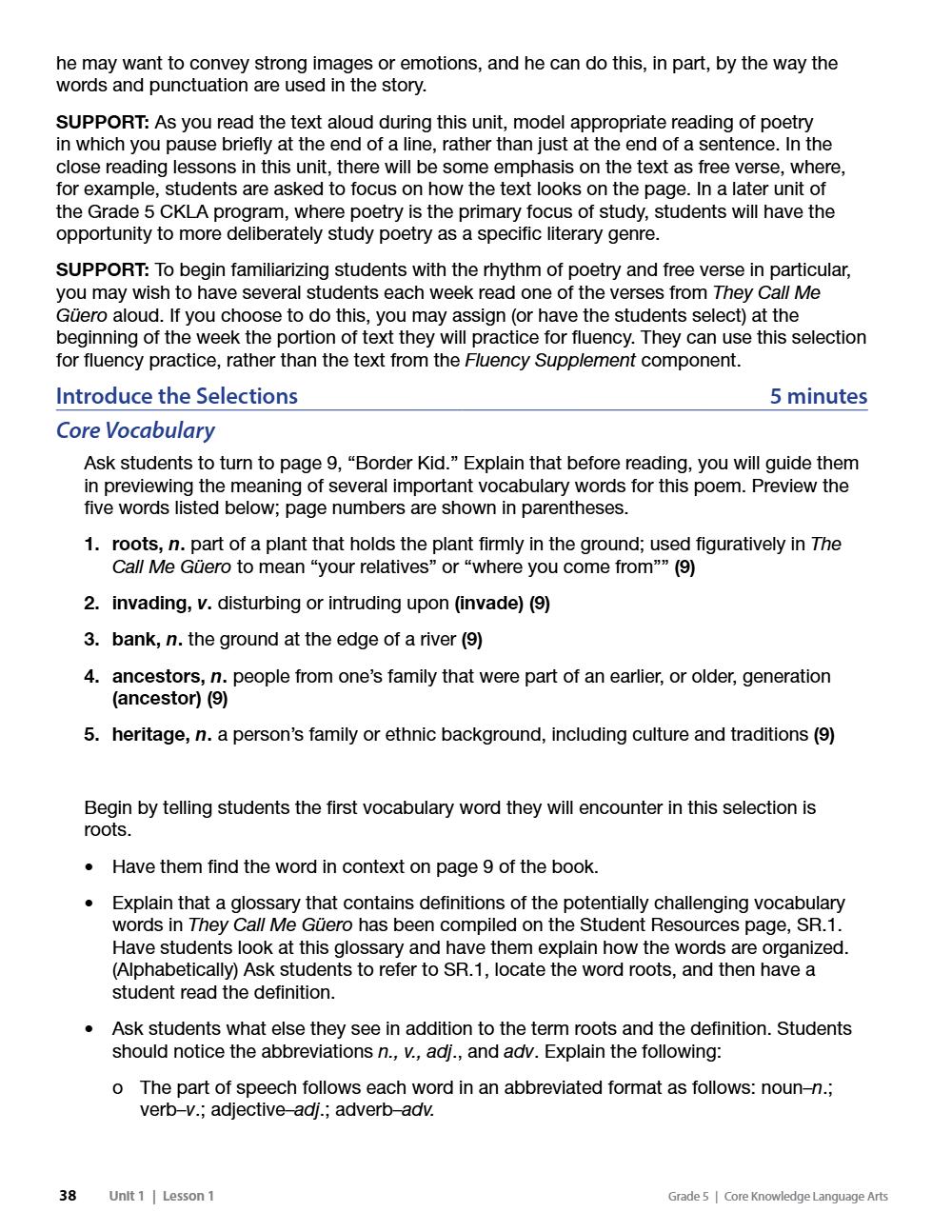
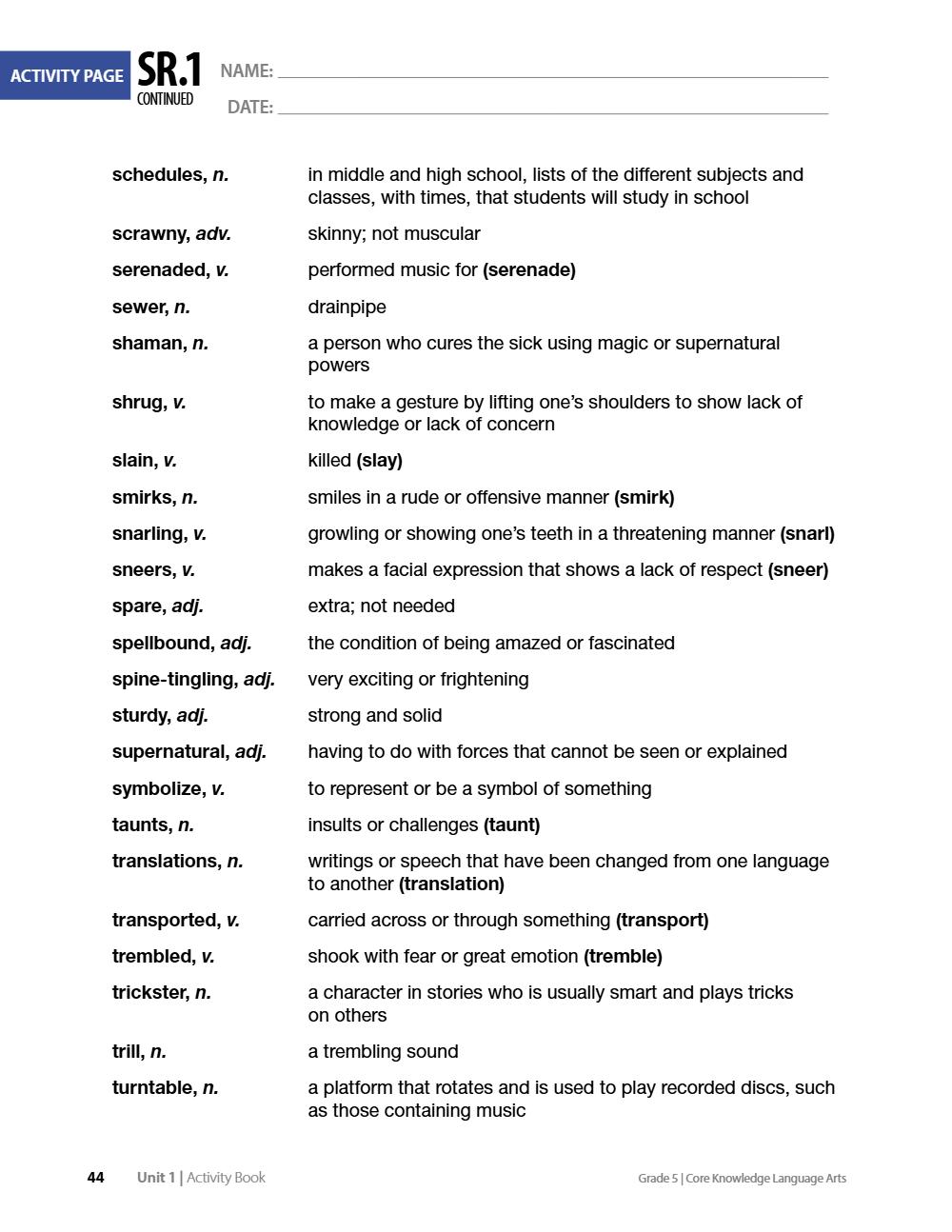
Words to know
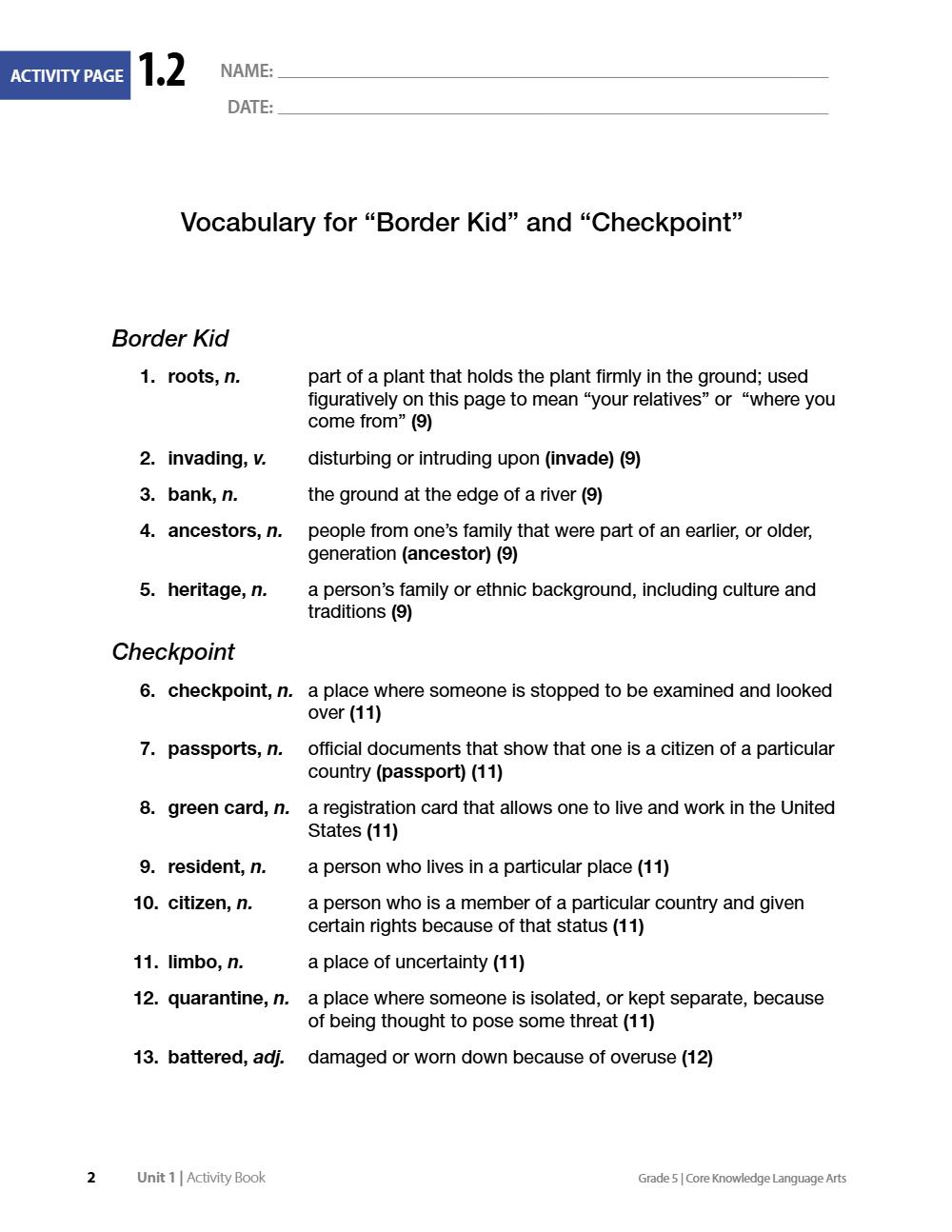
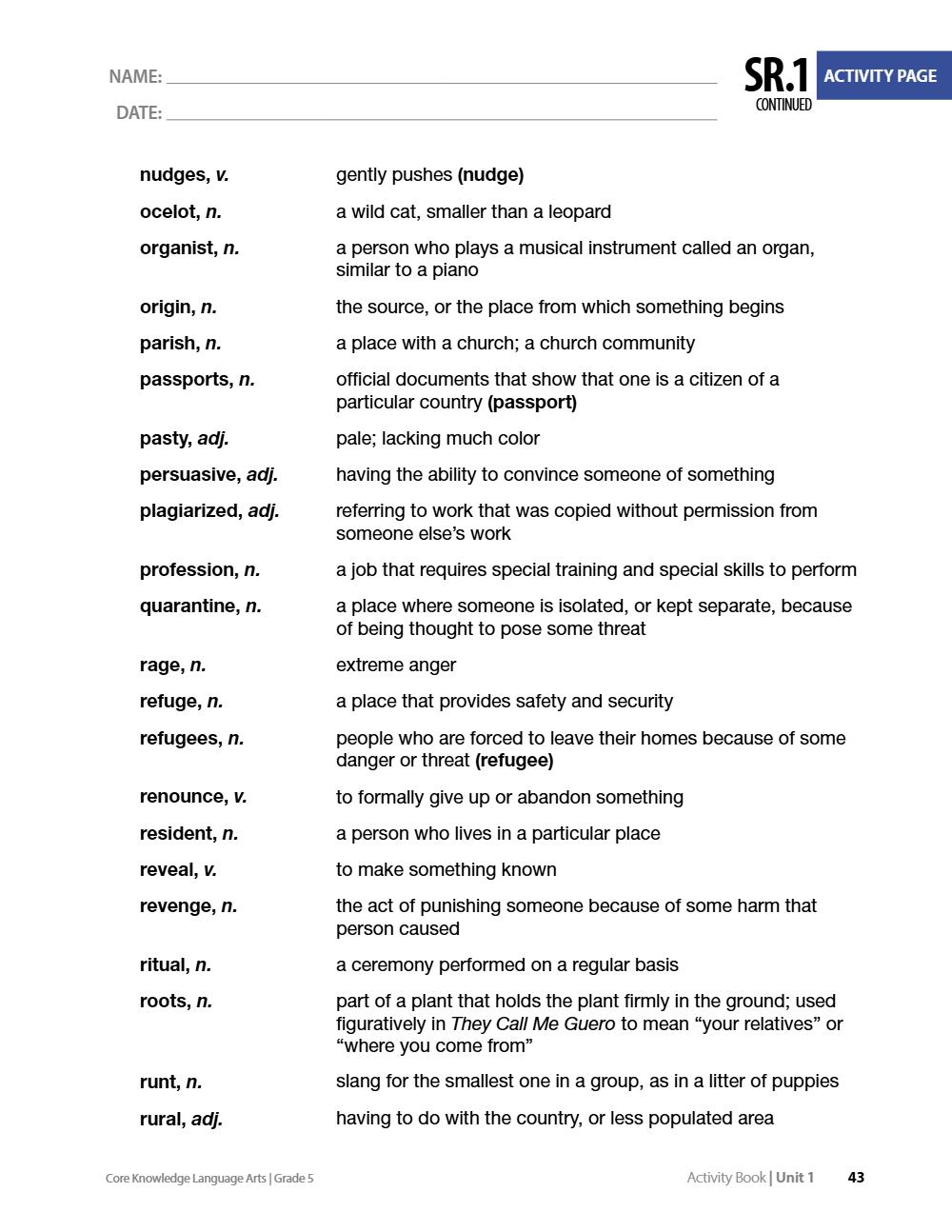
- roots
- part of a plant that holds the plant firmly in the ground; used figuratively in The Call Me Güero to mean “your relatives” or “where you come from””
- invading
- disturbing or intruding upon
- bank
- the ground at the edge of a river
- ancestors
- people from one’s family that were part of an earlier, or older, generation
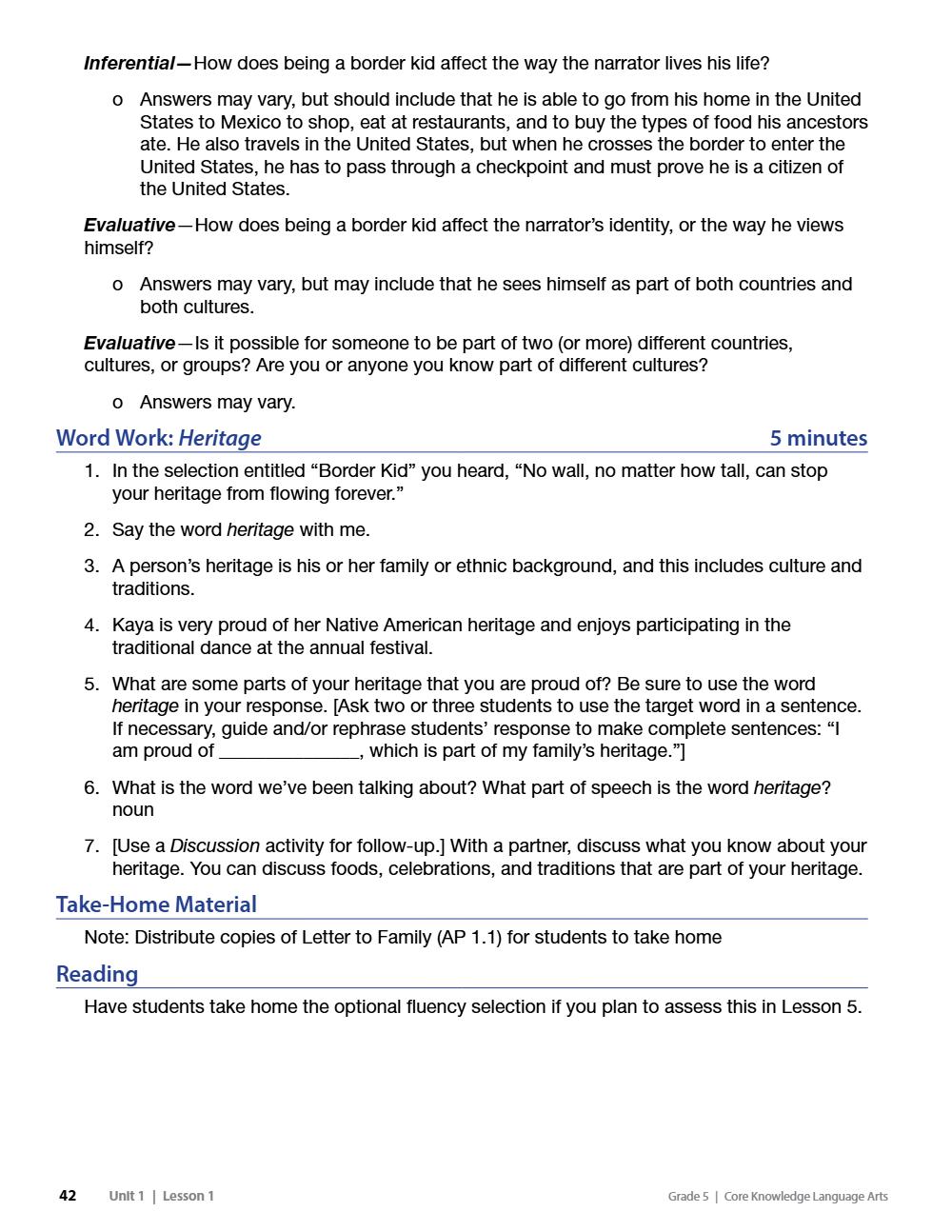
- heritage
- a person’s family or ethnic background, including culture and traditions
Teacher’s lesson plan
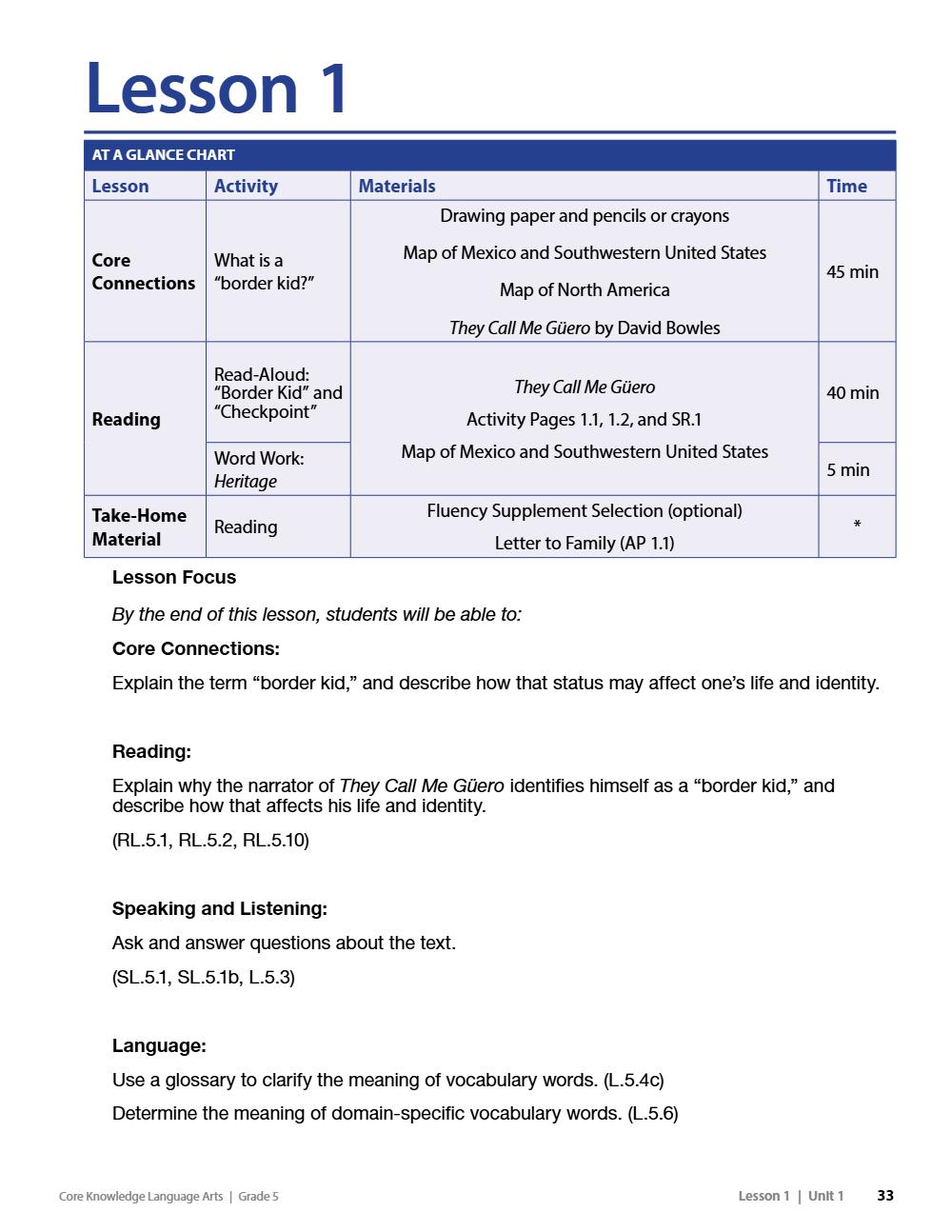
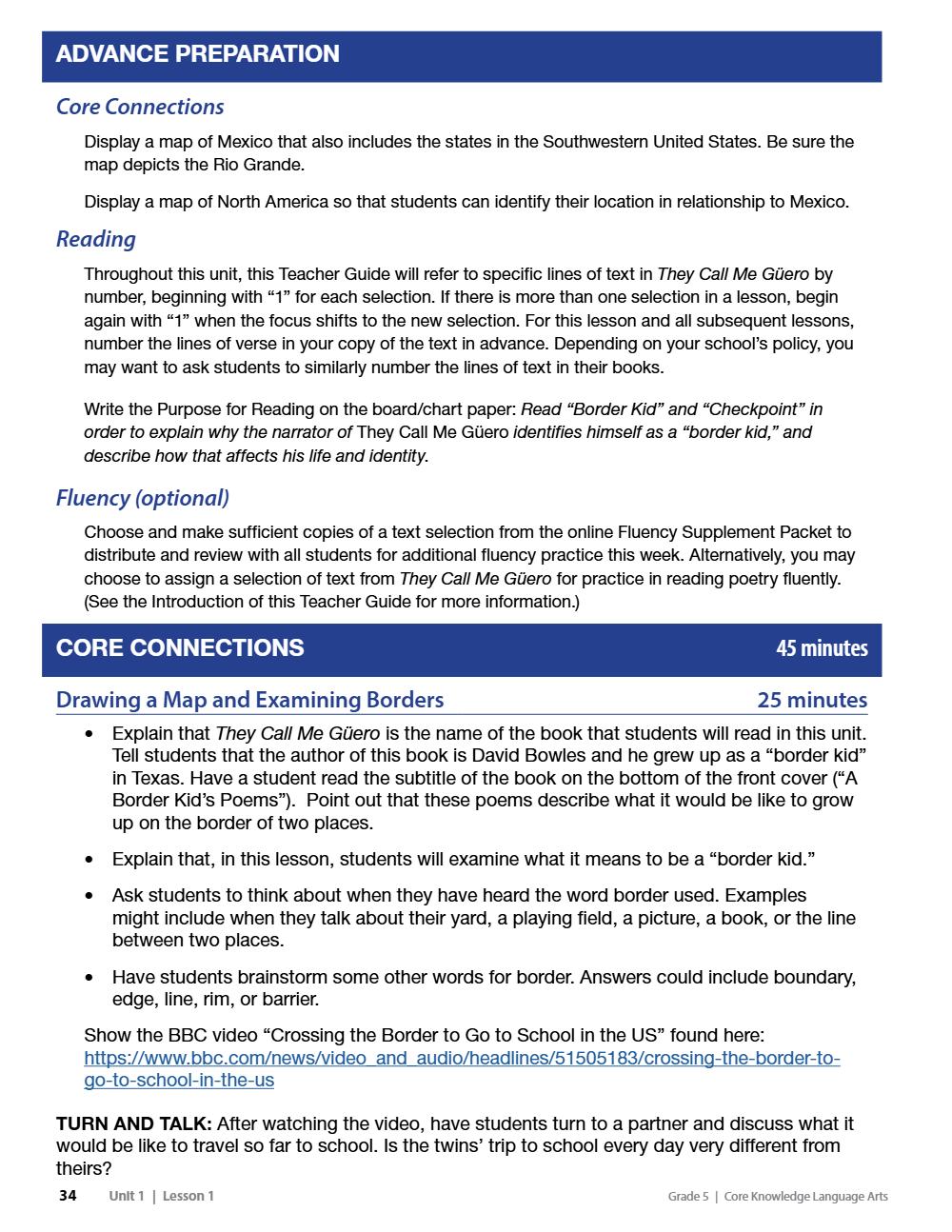
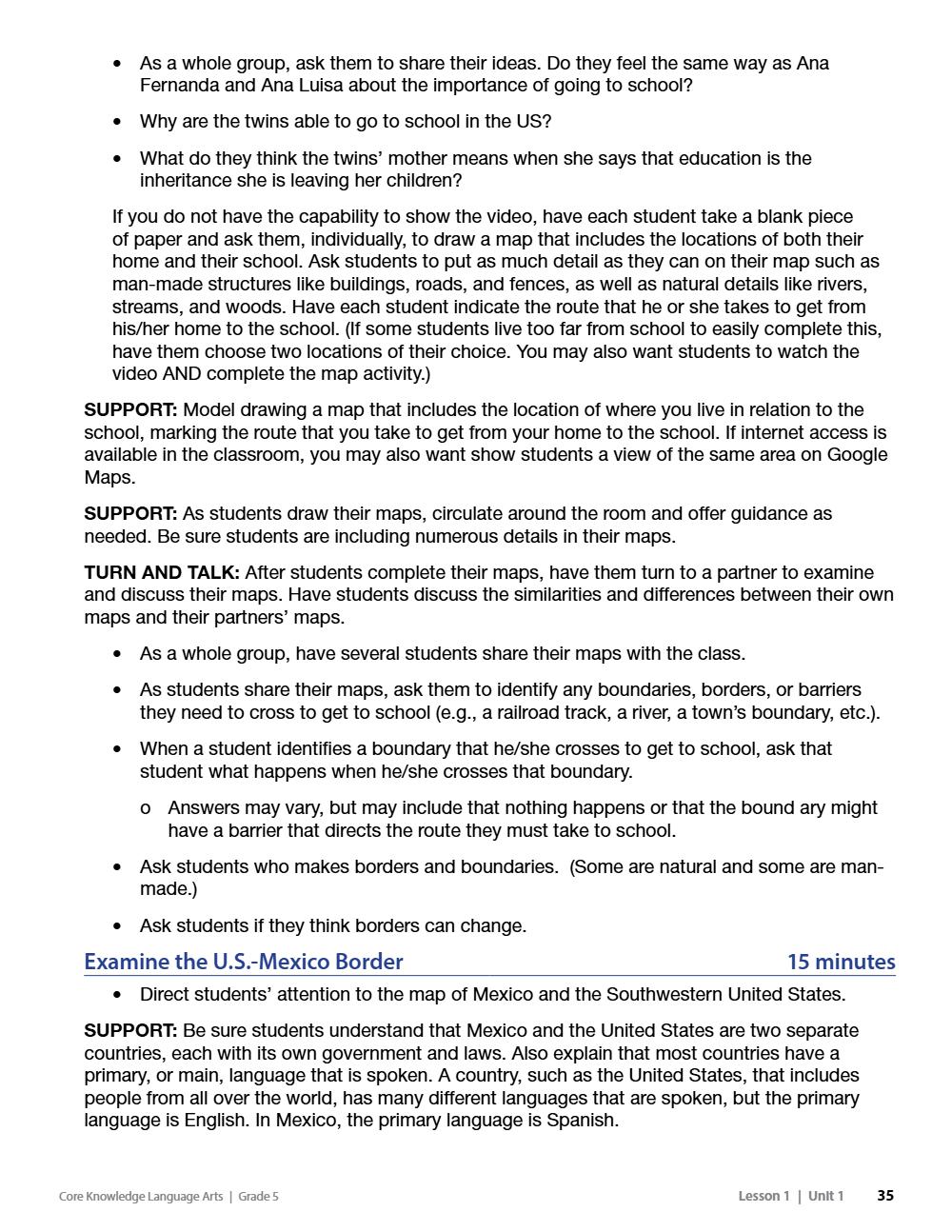
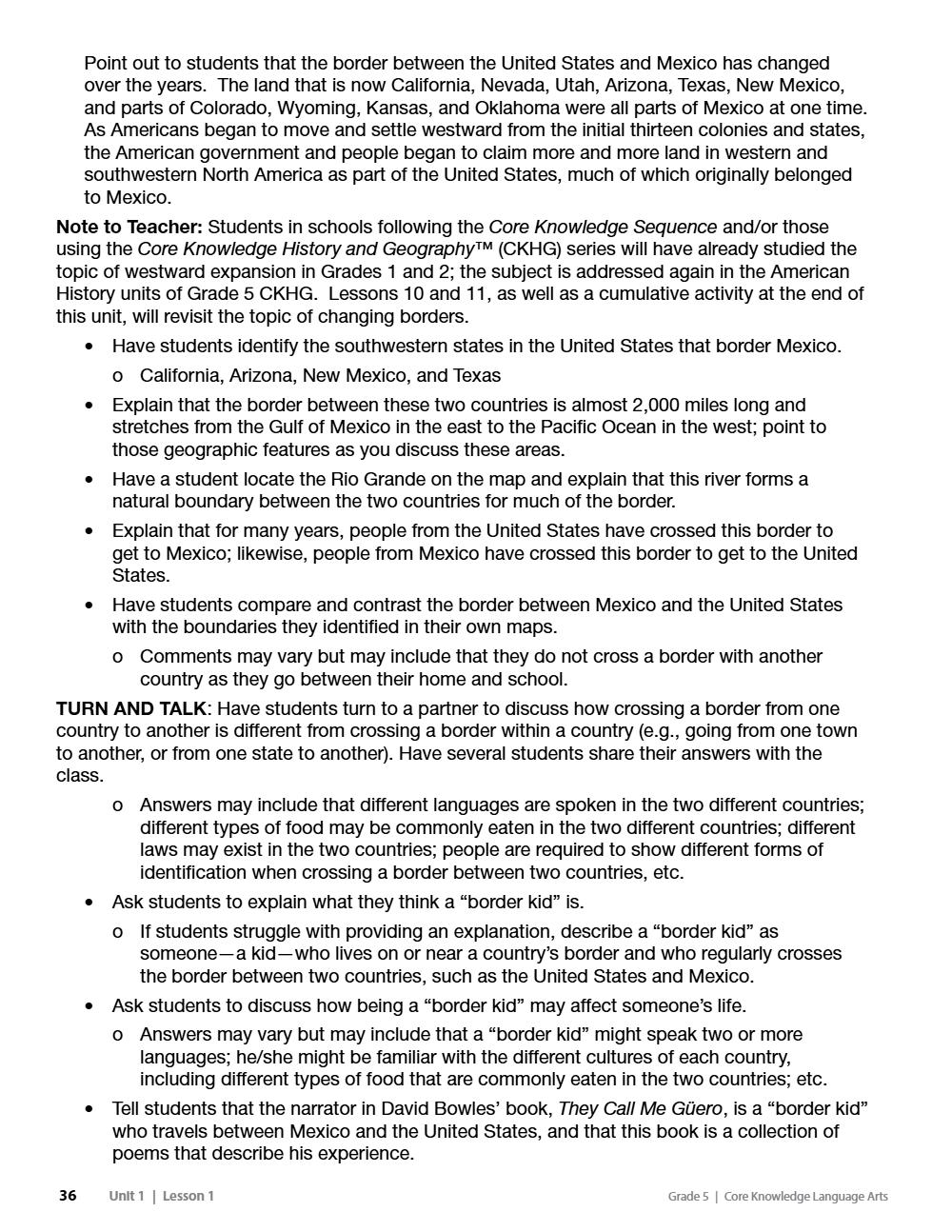
Read this first: the steps, materials and timing for today’s lesson, straight from the Teacher Guide.
Read
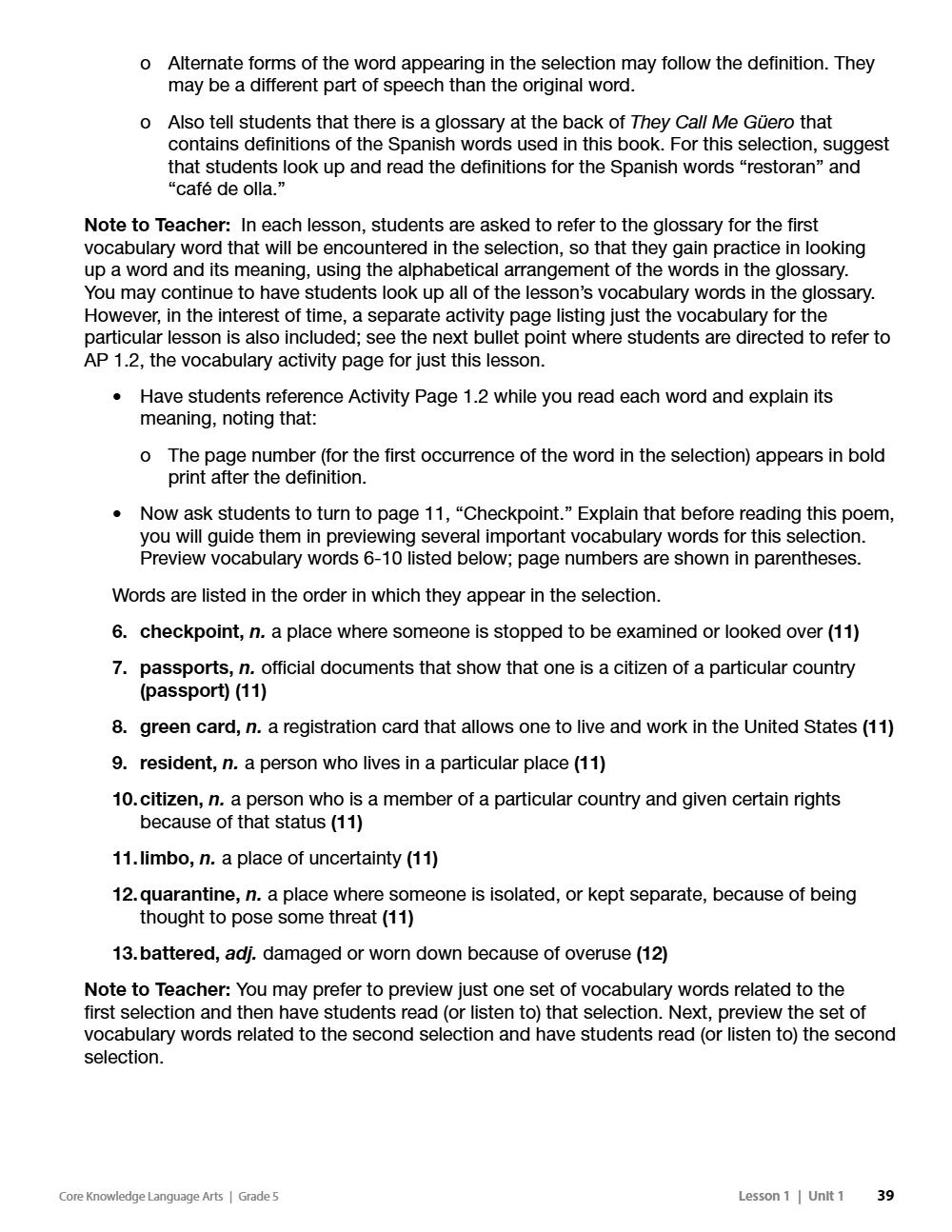
Read “border kid?”, “Border Kid” and “Checkpoint” in They Call Me Güero.
Read it aloud together, or let your student read on their own, then use the questions below.
Talk it over
Ask these as you read or afterward. Answers for the teacher are tucked under each question.
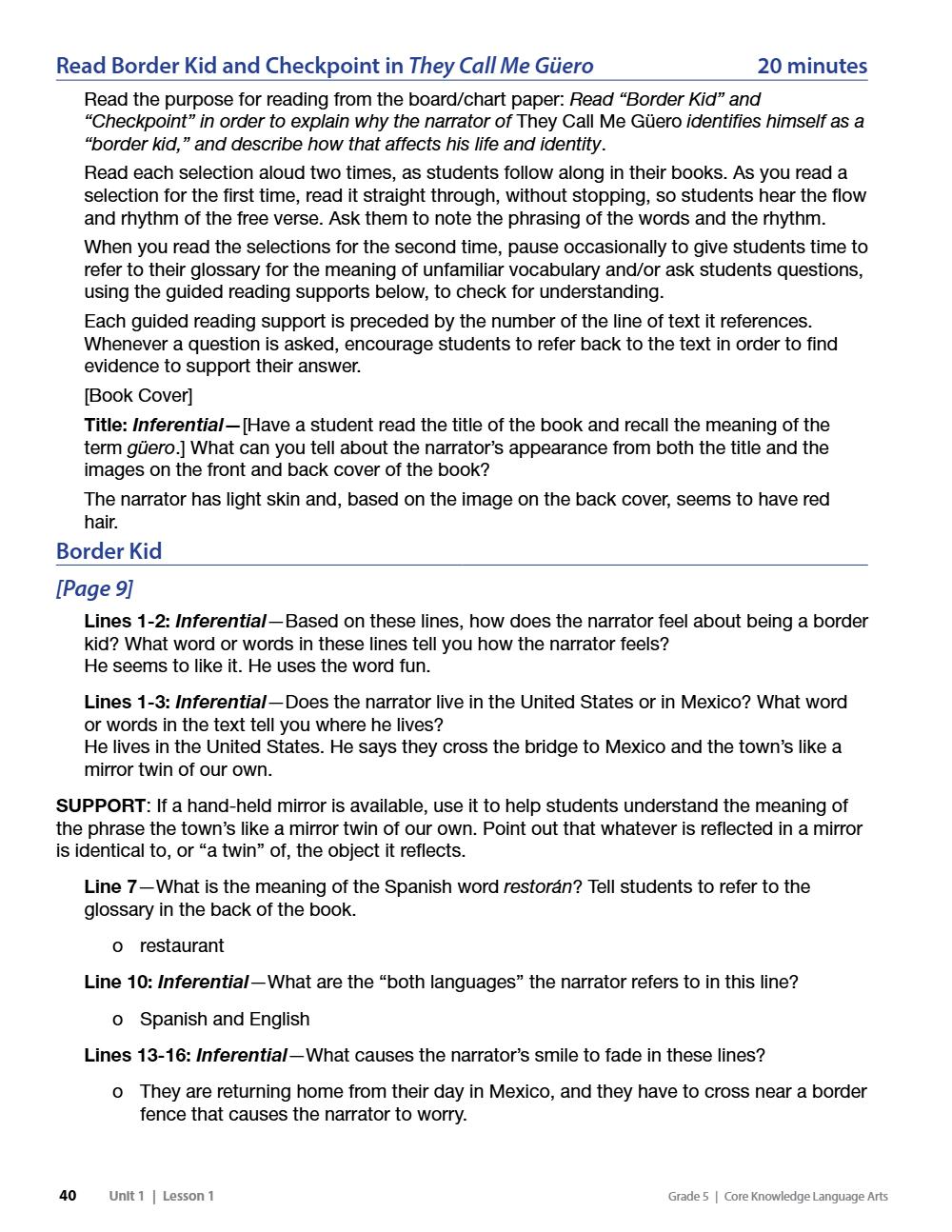
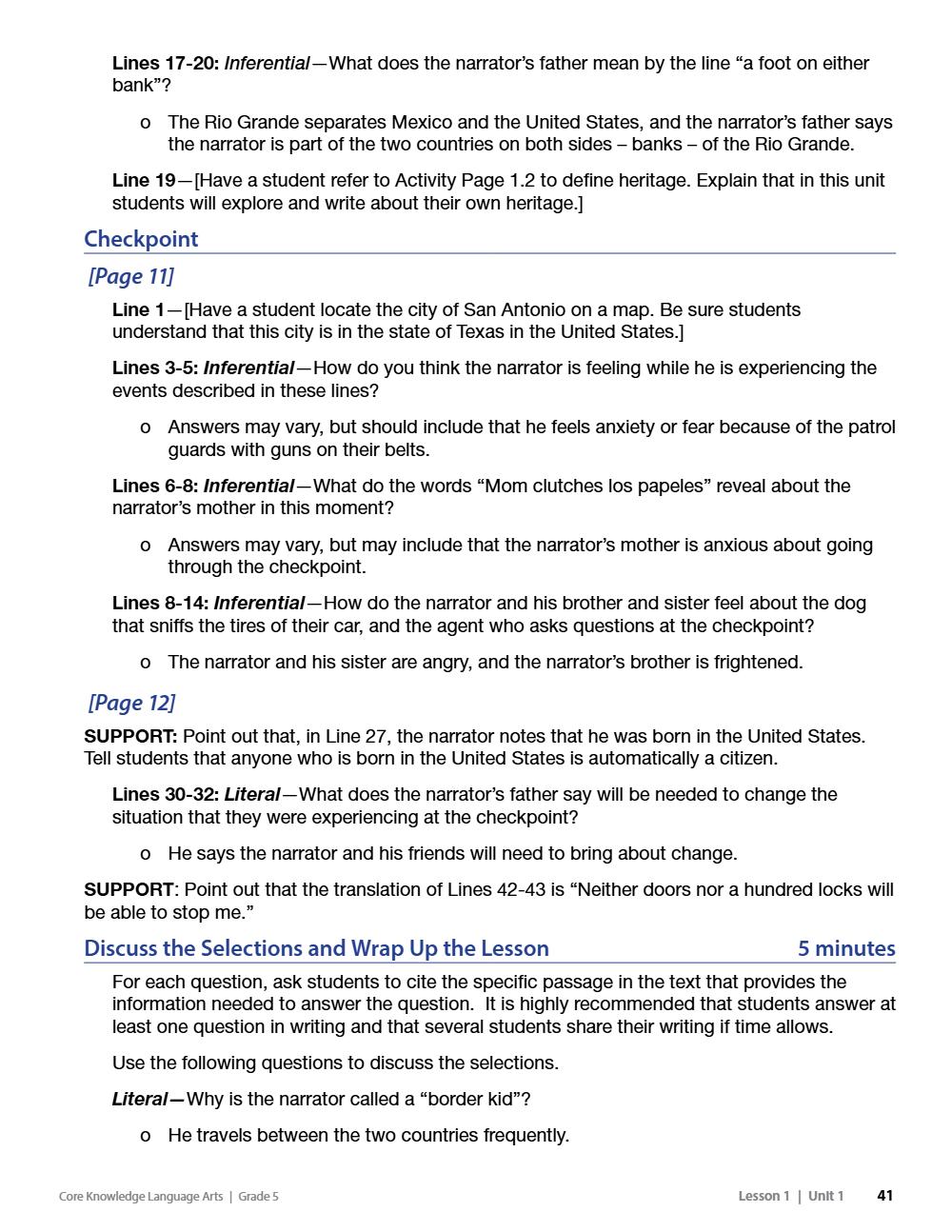
What are the “both languages” the narrator refers to in this line?
Answer
Spanish and English
What causes the narrator’s smile to fade in these lines?
Answer
They are returning home from their day in Mexico, and they have to cross near a border fence that causes the narrator to worry.
What does the narrator’s father mean by the line “a foot on either bank”?
Answer
The Rio Grande separates Mexico and the United States, and the narrator’s father says the narrator is part of the two countries on both sides – banks – of the Rio Grande. Line 19—[Have a student refer to Activity Page 1.2 to define heritage. Explain that in this unit students will explore and write about their own heritage.]
How do you think the narrator is feeling while he is experiencing the events described in these lines?
Answer
Answers may vary, but should include that he feels anxiety or fear because of the patrol guards with guns on their belts.
What do the words “Mom clutches los papeles” reveal about the narrator’s mother in this moment?
Answer
Answers may vary, but may include that the narrator’s mother is anxious about going through the checkpoint.
How do the narrator and his brother and sister feel about the dog that sniffs the tires of their car, and the agent who asks questions at the checkpoint?
Answer
The narrator and his sister are angry, and the narrator’s brother is frightened.
What does the narrator’s father say will be needed to change the situation that they were experiencing at the checkpoint?
Answer
He says the narrator and his friends will need to bring about change. SUPPORT: Point out that the translation of Lines 42-43 is “Neither doors nor a hundred locks will be able to stop me.”
Why is the narrator called a “border kid”?
Answer
He travels between the two countries frequently.
Activity Book pages
Your student completes these during the lesson (take-home pages are marked on the page). Print them, or have your student answer in a notebook.






Check for understanding
- Pick one of today’s words and use it in a sentence of your own.
For offline study
Download these once and you can teach this unit without the internet.
This course is based on an original work of the Core Knowledge® Foundation (www.coreknowledge.org) made available through licensing under a Creative Commons Attribution-NonCommercial-ShareAlike 4.0 International License. This does not in any way imply that the Core Knowledge Foundation endorses this work. PGAMO added the lesson pages, study packs and quizzes layout, and shares them under the same license. CC BY-NC-SA 4.0 · Core Knowledge Language Arts. Free for everyone — this course may never be sold.