Grade 8 Science
A free Grade 8 course from the PGAMO Free K–12 School, built on Core Knowledge Science (OpenSciEd). Units: Contact Forces, Sound Waves, Forces at a Distance, Earth in Space, Genetics, Natural Selection and Common Ancestry.
Every lesson has the chapter’s pages to read right on screen, the Big Question, words to know, talk-it-over questions with answers for the teacher, and activity pages to print. Each unit ends with a short quiz, and every unit has a printable study pack for learning offline.
CKSci 6–8 was originally developed and authored by OpenSciEd (www.openscied.org), licensed under a Creative Commons Attribution 4.0 International License (CC BY 4.0). Additions marked “Core Knowledge Science Literacy” are the work of the Core Knowledge® Foundation (www.coreknowledge.org), made available through licensing under a Creative Commons Attribution-NonCommercial-ShareAlike 4.0 International License. This does not in any way imply that OpenSciEd or the Core Knowledge Foundation endorses this work. PGAMO added the lesson pages, study packs and quizzes layout, and shares them under the same license. CC BY-NC-SA 4.0 · Core Knowledge Science (OpenSciEd). Free for everyone — this course may never be sold.
Features
- 125 lessons in 6 units
- The books’ pages right in each lesson
- Unit quizzes
- Printable offline study packs
Target audiences
- Grade 8 students
- Homeschool families and co-ops
Requirements
- Nothing to buy — every book is included free
- A parent or teacher to read and talk with younger students
Curriculum
- 7 Sections
- 126 Lessons
- 36 Weeks
- Start here1
- Unit 1: Contact Forces23
- 2.1Reading: Science Literacy Preface: Put Yourself in This Scene1 Week
- 2.2Lesson 1: What happens when two things hit each other?3 Days
- 2.3Lesson 2: What causes changes in the motion and shape of colliding objects?2 Days
- 2.4Reading: Science Literacy Collection 1: Collisions1 Week
- 2.5Lesson 3: Do all objects change shape or bend when they are pushed in a collision?1 Day
- 2.6Lesson 4: How much do you have to push on any object to get it to deform (temporarily vs. permanently)?2 Days
- 2.7Lesson 5: How does changing the mass or speed of a moving object before it collides with another object affect the forces on those objects during the collision?2 Days
- 2.8Reading: Science Literacy Collection 2: Bounce Back, Bend, Break, or Push1 Week
- 2.9Lesson 6: What have we figured out about objects interacting in collisions? How can we apply our new learning to answer questions about objects interacting in collisions?1 Day
- 2.10Lesson 7: How much does doubling the speed or doubling the mass affect the kinetic energy of an object and the resulting damage that it can do in a collision?2 Days
- 2.11Lesson 8: Where did the energy in our launcher system come from, and after the collisions where did it go to?1 Day
- 2.12Lesson 9: How do other contact forces from interactions with the air and the track cause energy transfers in the launcher system?2 Days
- 2.13Lesson 10: Why do some objects break or not break in a collision?2 Days
- 2.14Lesson 11: What can we design to better protect objects in a collision?2 Days
- 2.15Reading: Science Literacy Collection 4: Materials, Design, and Outcomes1 Week
- 2.16Lesson 12: What materials best reduce the peak forces in a collision?2 Days
- 2.17Lesson 13: How (and why) does the structure of a cushioning material affect the peak forces produced in a collision?3 Days
- 2.18Reading: Science Literacy Collection 5: Structures and Forces1 Week
- 2.19Lesson 14: How can we use our science ideas and other societal wants and needs to refine our designs?2 Days
- 2.20Lesson 15: How can we use what we figured out to evaluate another engineer’s design?2 Days
- 2.21Lesson 16: OPTIONAL How can we market our designs to our potential investors?4 Days
- 2.22Reading: Science Literacy Collection 61 Week
- 2.23Unit 1 words quiz: Contact Forces20 Minutes12 Questions
- Unit 2: Sound Waves21
- 3.1Reading: Science Literacy Preface: Put Yourself in This Scene1 Week
- 3.2Lesson 1: How does a sound source make something like this happen?3 Days
- 3.3Lesson 2: What is happening when speakers and other music makers make sounds?2 Days
- 3.4Reading: Science Literacy Collection 1: Musical Instruments1 Week
- 3.5Lesson 3: Do all objects vibrate when they make sounds?2 Days
- 3.6Lesson 4: How do the vibrations of the sound source compare for louder versus softer sounds?2 Days
- 3.7Lesson 5: How do the vibrations from a sound source compare for higher-pitch versus lower-pitch sounds?1 Day
- 3.8Reading: Science Literacy Collection 2: Sounds in Nature1 Week
- 3.9Lesson 6: How can any object make so many different sounds?2 Days
- 3.10Lesson 7: What is actually moving from the sound source to the window?1 Day
- 3.11Lesson 8: Do we need air to hear sound?1 Day
- 3.12Lesson 9: How can we model sound traveling through a solid, liquid, or gas?1 Day
- 3.13Reading: Science Literacy Collection 3: Sound and Media1 Week
- 3.14Lesson 10: What exactly is traveling across the medium?2 Days
- 3.15Lesson 11: How does sound make matter around us move?2 Days
- 3.16Lesson 12: What goes on in people’s ears so they can detect certain sounds?1 Day
- 3.17Reading: Science Literacy Collection 4: Compression Waves1 Week
- 3.18Lesson 13: What transfers more energy, waves of bigger amplitude or waves of greater frequency?2 Days
- 3.19Lesson 14: How can we explain our anchoring phenomenon, and which of our questions can we now answer?2 Days
- 3.20Reading: Science Literacy Collection 5: Air, Wind, and Sound1 Week
- 3.21Unit 2 words quiz: Sound Waves20 Minutes12 Questions
- Unit 3: Forces at a Distance19
- 4.1Reading: Science Literacy Preface: Put Yourself in This Scene1 Week
- 4.2Lesson 1: What causes a speaker to vibrate?4 Days
- 4.3Lesson 2: What can a magnet pull or push without touching?2 Days
- 4.4Reading: Science Literacy Collection 1: Day-to-Day Magnets1 Week
- 4.5Lesson 3: How does energy transfer between things that are not touching?1 Day
- 4.6Lesson 4: What can we figure out about the invisible space around a magnet?4 Days
- 4.7Reading: Science Literacy Collection 2: Beyond Magnets1 Week
- 4.8Lesson 5: How does the magnetic field change when we add another magnet to the system?1 Day
- 4.9Lesson 6: How can we use magnetic fields to explain interactions at a distance between the magnet and the coil?3 Days
- 4.10Reading: Science Literacy Collection 3: Gravity and Earth1 Week
- 4.11Lesson 7: How does changing the distance between two magnets affect the amount of energy transferred out of the field?1 Day
- 4.12Lesson 8: How does the energy transferred from a battery to a wire coil compare to the energy transferred from a computer to a speaker?3 Days
- 4.13Lesson 9: How do the magnet and the electromagnet work together to move the speaker?3 Days
- 4.14Reading: Science Literacy Collection 4: Noncontact Energy Transfer1 Week
- 4.15Lesson 10: How does distance affect the strength of force pairs in a magnetic field?3 Days
- 4.16Lesson 11: What else determines the strength of the force pairs between two magnets in a magnetic field?3 Days
- 4.17Reading: Science Literacy Collection 5: Magnetism and Bodies1 Week
- 4.18Lesson 12: What cause-effect relationships explain how magnetic forces at a distance make things work?2 Days
- 4.19Unit 3 words quiz: Forces at a Distance20 Minutes12 Questions
- Unit 4: Earth in Space23
- 5.1Reading: Science Literacy Preface: Put Yourself in This Scene1 Week
- 5.2Lesson 1: How are we connected to the patterns we see in the sky?4 Days
- 5.3Lesson 2: What patterns are happening in the sky that I have experienced and can observe (through models and tools)?1 Day
- 5.4Lesson 3: How can we explain the Sun’s path change over time?3 Days
- 5.5Lesson 4: How do these changes in sunlight impact us here on Earth?2 Days
- 5.6Reading: Science Literacy Collection 1: Sky Watching Since Days of Old1 Week
- 5.7Lesson 5: How can we explain phenomena like Manhattanhenge?1 Day
- 5.8Lesson 6: Why do we see the shape of the Moon change?2 Days
- 5.9Lesson 7: Why do we see eclipses and when do we see them?2 Days
- 5.10Reading: Science Literacy Collection 2: Reaching for the Moon1 Week
- 5.11Lesson 8: What does a lunar eclipse look like and how can we explain it?1 Day
- 5.12Lesson 9: Why do the Moon and Sun appear to change color near the horizon?1 Day
- 5.13Lesson 10: How does light interact with matter in the atmosphere?1 Day
- 5.14Lesson 11: How does the shape of a water droplet or an ice crystal cause sunlight to form into a rainbow?2 Days
- 5.15Reading: Science Literacy Collection 3: Imaging and Imagining Space1 Week
- 5.16Lesson 12: Why does the Moon always change color during a lunar eclipse?2 Days
- 5.17Lesson 13: What new patterns do we see when we look more closely at other objects in the sky?3 Days
- 5.18Reading: Science Literacy Collection 4: Space On-Screen1 Week
- 5.19Lesson 14: Why do some solar system objects orbit planets and others orbit the Sun?2 Days
- 5.20Lesson 15: How did the solar system get to be the way it is today?1 Day
- 5.21Lesson 16: What patterns and phenomena are beyond our solar system that we cannot see with just our eyes?1 Day
- 5.22Lesson 17: How are we connected to all of the systems in space beyond the planet we live on?2 Days
- 5.23Unit 4 words quiz: Earth in Space20 Minutes12 Questions
- Unit 5: Genetics24
- 6.1Reading: Science Literacy Preface: Put Yourself in This Scene1 Week
- 6.2Lesson 1: How do organisms get their differences?3 Days
- 6.3Lesson 2: How do extra-big muscles compare to typical ones up close?1 Day
- 6.4Lesson 3: How do diet and exercise affect muscle size?1 Day
- 6.5Reading: Science Literacy Collection 1: Muscles and Other Traits1 Week
- 6.6Lesson 4: What is different about the food and exercise for cattle with extra-big muscles?1 Day
- 6.7Lesson 5: Where do the babies with extra-big muscles get that trait variation?2 Days
- 6.8Lesson 6: How do chromosomes cause cattle to be born with extra-big muscles?2 Days
- 6.9Reading: Science Literacy Collection 2: Born or Built1 Week
- 6.10Lesson 7: How does an animal get extra-big muscles?2 Days
- 6.11Lesson 8: Why don’t offspring always look like their parents or their siblings?2 Days
- 6.12Lesson 9: How do farmers control the variation in their animals?2 Days
- 6.13Reading: Science Literacy Collection 3: Picking Parents1 Week
- 6.14Lesson 10: How can we use our model to explain a different trait variation?1 Day
- 6.15Lesson 11: How can we answer the rest of our questions?1 Day
- 6.16Lesson 12: Do plants have genetic material?1 Day
- 6.17Lesson 13: How do plants reproduce?2 Days
- 6.18Reading: Science Literacy Collection 4: Plants and Variation1 Week
- 6.19Lesson 14: (How) do other organisms reproduce without sperm and eggs?2 Days
- 6.20Lesson 15: How do we get variations if the genetic information is exactly the same?1 Day
- 6.21Lesson 16: How much of trait variation in a population is controlled by genes or by the environment?2 Days
- 6.22Reading: Science Literacy Collection 5: Making New Individuals1 Week
- 6.23Lesson 17: Why are living things different from one another?2 Days
- 6.24Unit 5 words quiz: Genetics20 Minutes12 Questions
- Unit 6: Natural Selection and Common Ancestry21
- 7.1Reading: Science Literacy Preface: Put Yourself in This Scene1 Week
- 7.2Lesson 1: How could penguins and other things living today be connected to the things that lived long ago?4 Days
- 7.3Lesson 2: How similar or different are different species of penguins?2 Days
- 7.4Lesson 3: How do the body structures of other ancient penguins compare to modern penguins?2 Days
- 7.5Lesson 4: Why are there similarities and differences in the body structures of modern and ancient penguins?2 Days
- 7.6Reading: Science Literacy Collection 1: Earth’s Long Life Story1 Week
- 7.7Lesson 5: How might other living things be connected to ancient organisms?2 Days
- 7.8Lesson 6: How could organisms living today be connected to organisms that lived long ago?2 Days
- 7.9Lesson 7: How do traits found in a population change over a shorter amount of time?3 Days
- 7.10Reading: Science Literacy Collection 2: Genes, Species, and Change1 Week
- 7.11Lesson 8: How can we model what is causing the changes in the populations happening across all our case studies?2 Days
- 7.12Lesson 9: How well does our General Model predict and explain the changes happening over time in a different population?2 Days
- 7.13Lesson 10: Why does our General Model tend to produce different outcomes in different environmental conditions?2 Days
- 7.14Reading: Science Literacy Collection 3: Selection and Survival1 Week
- 7.15Lesson 11: Can we use our General Model for Natural Selection to explain changes over time in green anole lizards?1 Day
- 7.16Lesson 12: Can our model explain changes over really long periods of time?2 Days
- 7.17Lesson 13: Can we apply the General Model for Natural Selection over millions of years to explain how all the ancient and modern penguins are connected?2 Days
- 7.18Reading: Science Literacy Collection 4: From Ancient to Modern Species1 Week
- 7.19Lesson 14: What do the patterns in embryo development tell us about how things living today could be connected to the things that lived long ago?2 Days
- 7.20Lesson 15: What can we explain now, and what questions do we still have?1 Day
- 7.21Unit 6 words quiz: Natural Selection and Common Ancestry20 Minutes12 Questions
Instructor
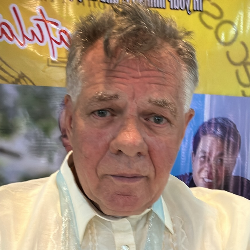
Founder and Director of Pentecostal Gospel Assemblies